
Choosing the right lighting can cut your energy bills and make your cedar log home glow. We break down the best fixtures, placements, and bulb types for every room.
Why Lighting Goes Wrong in Log Homes
Most folks don't think about lighting until the sun drops and they're squinting across the great room. In a cedar log home, that moment arrives sooner and frustrates harder. Solid log walls carry a lot of mass and very few hollow chases, so you can't rely on the easy recessed cans and drywall cavities you'd get in a stick-built house. Every light location has to be decided long before the cedar goes up.
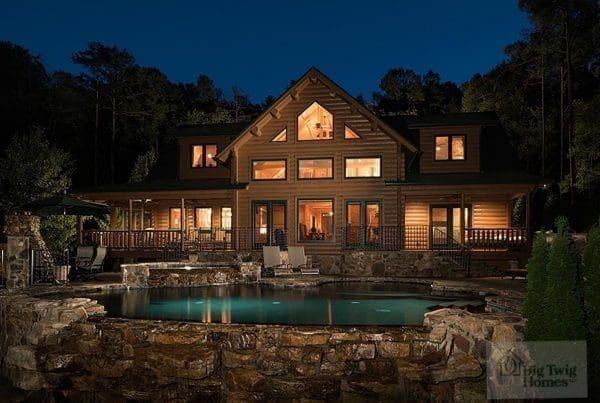
Get it right and lighting earns its keep twice over: it trims your power bill and it makes the wood glow the way it's supposed to. That warm, honeyed look you admire in the best log home photos isn't luck — it's the right color temperature, the right fixtures, and honest planning about where the light needs to fall.
Start With Color Temperature
The easiest win is picking the right bulb temperature. Warm light — somewhere in the 2700K to 3000K range — is what cedar wants. It brings out the amber, red, and honey tones in the wood and makes the room feel like a cabin instead of a clinic. Cooler 4000K and 5000K light reads blue and flat against cedar, and everyone notices it looks wrong even if they can't say why.
Keep one simple rule in mind: warm and warm. Match your bulbs to the tone of the logs. It's a two-second decision at the store that changes the whole mood of a room after dark.
- Living and great rooms: 2700K–3000K, dimmable LEDs.
- Kitchens: 3000K for task light, with 2700K in the dining side.
- Bedrooms and reading nooks: 2700K, low-glare fixtures.
- Bathrooms: 3000K near mirrors so you're not guessing at makeup or shaving light.
Layered Light Is the Secret
A single big fixture in the center of the ceiling is how most log homes end up, and it's almost always disappointing. The fix is to layer light — ambient, task, and accent — so each one does a job the others can't.
Ambient light fills the room and sets the base level. Task light lands where you actually work or read. Accent light — a picture light over a mantel, uplights washing a log wall, or a strip under a cabinet — is what makes the space feel designed rather than just lit.
Work Around the Wood
Because you can't easily add switches or wires once the logs are in, location planning has to happen in the design phase. Think hard about wall sconces, ceiling drops, and where the switch runs will hide before you bid the framing.
When a wall sconce absolutely can't avoid a log, plan the wire chase before the log is set. It's a detail builders like us handle on every project, but it's the kind of thing that's miserable to retrofit later.
Match the Fixture to the Style
Log homes take fixtures beautifully, but the fixtures have to earn their place. Wrought iron, aged bronze, and hammered copper all talk the same language as cedar. Stay away from anything too polished or modern-chrome in the main rooms unless you're deliberately going for contrast.
A good rule: the fixture should look like it could have been forged on the property. Style matters for resale too, so keep the finishes cohesive from room to room.
The Payoff
Switch to warm, layered LED lighting and you'll not only save on the monthly bill — the house will feel bigger, warmer, and more like the cabin you pictured when you signed for the package. It's one of the least expensive upgrades that makes the biggest visible difference in a cedar home.
If you're early in planning your build, ask about lighting during the design review. Decisions made on paper cost pennies. Decisions made after the stained logs are up cost a lot more than that.
Big Twig Homes Team
The Big Twig Homes team prepares practical planning information for cedar log, hybrid, EPS SIP home, and EPS building material packages. Product and technical references are identified where applicable; your current quote and project professionals control the scope for your project.
Read our editorial standards