Sustainability isn't a buzzword when you're building with logs -- it's inherent in the material. This guide covers every decision point from site selection to finishing.
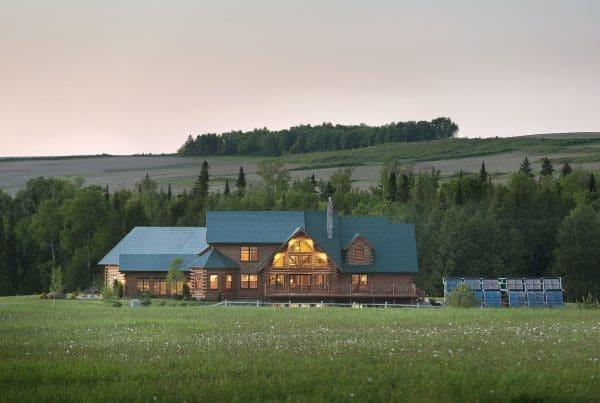
Why Logs Are Green From the Start
Every few years somebody re-invents green building with a new synthetic material and a clever marketing campaign. And every few years, the humble log gets overlooked. But here's the thing: a log home is about as sustainable as construction gets. Cedar is renewable, it's harvested locally in much of the Southeast, it sequesters carbon for the life of the house, and it doesn't require the energy-hungry manufacturing of steel, concrete, or engineered lumber. The footprint of a log home is measured in decades, and it starts negative.
That's not to say every log home is automatically eco-friendly. How you site it, insulate it, heat it, and finish it determines whether you're truly living green or just living in a house made of wood. This guide walks through each decision, from the first visit to the property to the last coat of finish, so you can build a log home that's as kind to the mountain as it is beautiful.
Siting and Orientation Come First
The greenest building decision you'll make is choosing where the house sits and how it faces. A house that captures southern light in the winter and shades the afternoon sun in the summer needs dramatically less energy than a poorly oriented house, no matter how good the insulation is.
On a hilly lot in Western North Carolina, every site has a personality. I like to walk a property at different times of day before we ever lay out a foundation, just to feel where the sun goes. Faces toward the valley catch morning light and breeze. Faces into the ridge line stay cooler in summer but fight wind in winter. You can't fix orientation after the fact, so get it right early.
Also think about the trees you remove and the ones you keep. Mature hardwood canopy on the west and southwest side gives you free afternoon shade. Keep those trees and your cooling load drops noticeably. Remove them for a wider view and you'll pay for it every July.
The Material: Cedar's Carbon Story
Cedar is the natural choice here, and it's green for real reasons, not just vibes. It's a renewable resource. It grows relatively fast, it's abundant across the Southeast, and a responsibly managed cedar forest actually gets harvested in a way that keeps the land healthy and regenerating.
Every log stores carbon that stays locked up for as long as the house stands. Compare that to vinyl siding, which comes from petroleum, or aluminum, which takes enormous energy to smelt. A cedar log is one of the few building materials that's carbon-negative in its production and stays that way for a hundred years.
Choose a supplier who can talk about their timber stand management, not just their price per log. The difference matters, and it's a question that more and more of our customers are asking, which is good to see.
Insulation: Where Log Homes Need a Helping Hand
Logs have natural thermal mass, which is fantastic for moderating temperature swings. The logs soak up heat during the day and release it slowly at night. But when it comes to pure insulation value, a solid log wall isn't your highest R-value option. Cedar is around R-1.4 per inch, so an 8-inch log gives you roughly R-11 in the wall's nominal thickness.
That's where smart design comes in. An eco-friendly log home usually pairs the thermal mass of the logs with high-performance insulation somewhere else — in the roof, under the floor, and possibly in an interior framed section. The roof especially deserves attention, because heat rises and a poorly insulated roof can undo all the good work of the walls.
Our standard approach is to make the roof and floor assemblies the tightest, best-insulated parts of the house, and let the log walls carry the mass and the beauty. The result is a home that's cozy in February and cool in August, without running the HVAC ragged.
Windows and the Sealing of the Envelope
Windows are where most energy in a home leaks out, and log homes are no exception. In fact, the thermal mass of the logs makes the window quality especially noticeable. A great log home deserves great windows — double or triple pane, low-E glass, and proper installation with real attention to sealing.
The log-to-log seal needs careful installation. Your builder should follow the specified gasket, sealant, and connection details and coordinate a suitable verification plan. Big Twig can help with questions about the supplied package.
Heating and Cooling for a Green Log Home
Once the envelope is tight, the mechanical system can be both smaller and greener. In the mountains, a high-efficiency heat pump is usually the right primary system. It runs on electricity, which in many parts of our region is getting cleaner. Add a programable or smart thermostat and you're only conditioning the spaces you're actually using.
Radiant heat under a stone or wood floor is a natural pairing for a log home. It's comfortable, it's efficient, and it complements the thermal mass of the logs beautifully. If you're building on a wooded lot, a well-placed wood stove or fireplace can take the edge off the coldest weeks while running on free fuel that's already carbon-neutral. Just make sure the chimney and clearances are done right.
Solar is worth serious consideration if you're in an exposed spot. The Blue Ridge gets more sun than people expect, and net metering in North Carolina has made panels a genuinely smart investment for log homeowners who site them well.
Finishes That Stay Green
The finish on your logs does more than keep them pretty. A good exterior finish protects the wood from moisture and UV damage for years, and selecting one with low VOCs keeps the air inside healthier too. Water-based stains and natural oils have come a long way, and they outperform their older, smellier cousins.
Inside, skip anything that's going to off-gas for months. Use low-VOC paints on trim, natural oils or beeswax on interior wood, and wool or natural fiber rugs. A log home already brings the outdoors in; there's no reason to fill it with chemical smells.
And plan for maintenance as part of your green story. A well-maintained finish means your logs last decades longer, which means you're not replacing materials in twenty years. Durability is sustainability in disguise.
Putting It All Together
Building an eco-friendly log home isn't about checking a dozen green badges off a list. It's about making a set of smart, connected choices that add up to a whole that's greater than the parts. Site it right, insulate the roof and floor well, seal it tight, choose efficient equipment, and finish it with products that don't pollute.
When all of that comes together in a cedar home on a Blue Ridge ridge line, you get something genuinely special: a house that's beautiful, comfortable, and responsible. That's the log home we're proud to build, and the one we'd want to live in ourselves.
Big Twig Homes Team
The Big Twig Homes team prepares practical planning information for cedar log, hybrid, EPS SIP home, and EPS building material packages. Product and technical references are identified where applicable; your current quote and project professionals control the scope for your project.
Read our editorial standards