
There's real science behind why log homes feel so good to live in. Biophilic design connects you to nature through natural materials, light, and spatial flow.
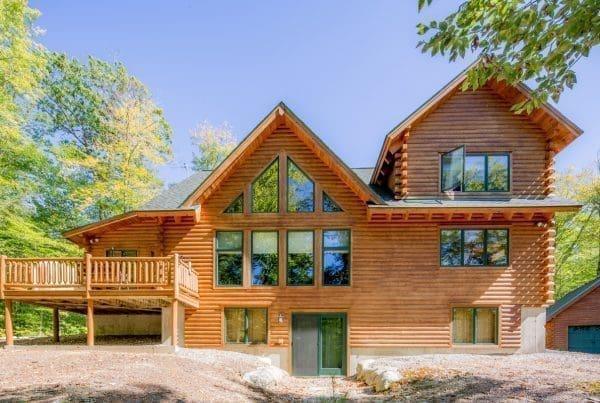
Why Log Homes Feel So Good to Be In
There's a reason people describe stepping into a cedar log home as feeling like a deep breath. It's not nostalgia, and it's not just marketing. There's genuine science behind it, and it has a name: biophilic design — the idea that humans are wired to thrive in spaces connected to nature.
A log home isn't accidentally biophilic. It's made of a natural material, bathed in natural light, and full of the textures and warmth our brains evolved to respond to. When you understand that, you can design one to be even better.
The Science of Feeling at Home in Wood
Study after study has found that natural materials in the built environment lower stress and blood pressure, improve mood, and even speed recovery. Wood in particular reads as warm and safe to us on a level we don't consciously register.
The look and feel of real cedar does something no printed laminate or vinyl can replicate, because our perception of it isn't just visual — it's the grain, the scent, the slight variation in the surface. All of it tells your nervous system, quietly, that you're in a good place.
Light Is Half the Connection
Biophilic design is just as much about light as it is about material. The best log homes pull in natural daylight through well-placed windows, giving you views of the trees and sky from the rooms you actually live in. That connection to the outside — seeing the weather change, the light move, the season turn — is a big part of why these homes feel alive.
When we site a home on a mountain lot, we think hard about where the sun rises, where the view sits, and how the afternoon light will move across the great room. That's not decoration. It's design for how you'll actually feel.
Bringing the Outdoors In
Biophilic homes blur the line between inside and out. Big porches, screened rooms, and window walls that open onto the trees all pull nature into your daily rhythm. Even the layout — a great room oriented to the view, a dining nook that catches morning sun — reinforces the connection.
The materials do the same. Beyond the logs themselves, natural stone around a fireplace, wood floors, and earthy textiles all echo the landscape instead of fighting it.
Design for Wellbeing, Not Just Square Footage
Most home design starts with square footage and room counts. Biophilic design starts with how a space makes you feel and works backward to the plan. That's a mindset shift, and it tends to produce homes that don't just look good in photos — they feel good to live in, every single day.
If you're planning a log home, ask how your layout, your light, and your materials work together to keep you connected to nature. The warm feeling you get walking into a good log home isn't an accident. It's design that was paying attention.
Big Twig Homes Team
The Big Twig Homes team prepares practical planning information for cedar log, hybrid, EPS SIP home, and EPS building material packages. Product and technical references are identified where applicable; your current quote and project professionals control the scope for your project.
Read our editorial standards