FSC-certified wood is the smart choice for building log homes. It ensures responsible sourcing, reduces environmental impact, and adds long-term value to your property. Here’s why:
- Verified Sourcing: FSC certification guarantees wood is responsibly harvested, protecting forests and biodiversity.
- Lower Carbon Footprint: FSC-managed forests store up to 29% more carbon than conventional ones, contributing to climate goals.
- Durability and Comfort: Certified wood offers consistent quality, better insulation, and moisture regulation for lasting, energy-efficient homes.
- Social Responsibility: FSC standards support fair labor practices and Indigenous rights while benefiting local economies.
- Increased Home Value: Eco-conscious buyers value FSC-certified materials, enhancing resale potential. Choosing the right log home floor plans can further maximize this value.
Quick Fact: FSC-certified wood may cost 0%–15% more, but its benefits far outweigh the slight premium. Look for the FSC logo to ensure your materials meet these strict standards.
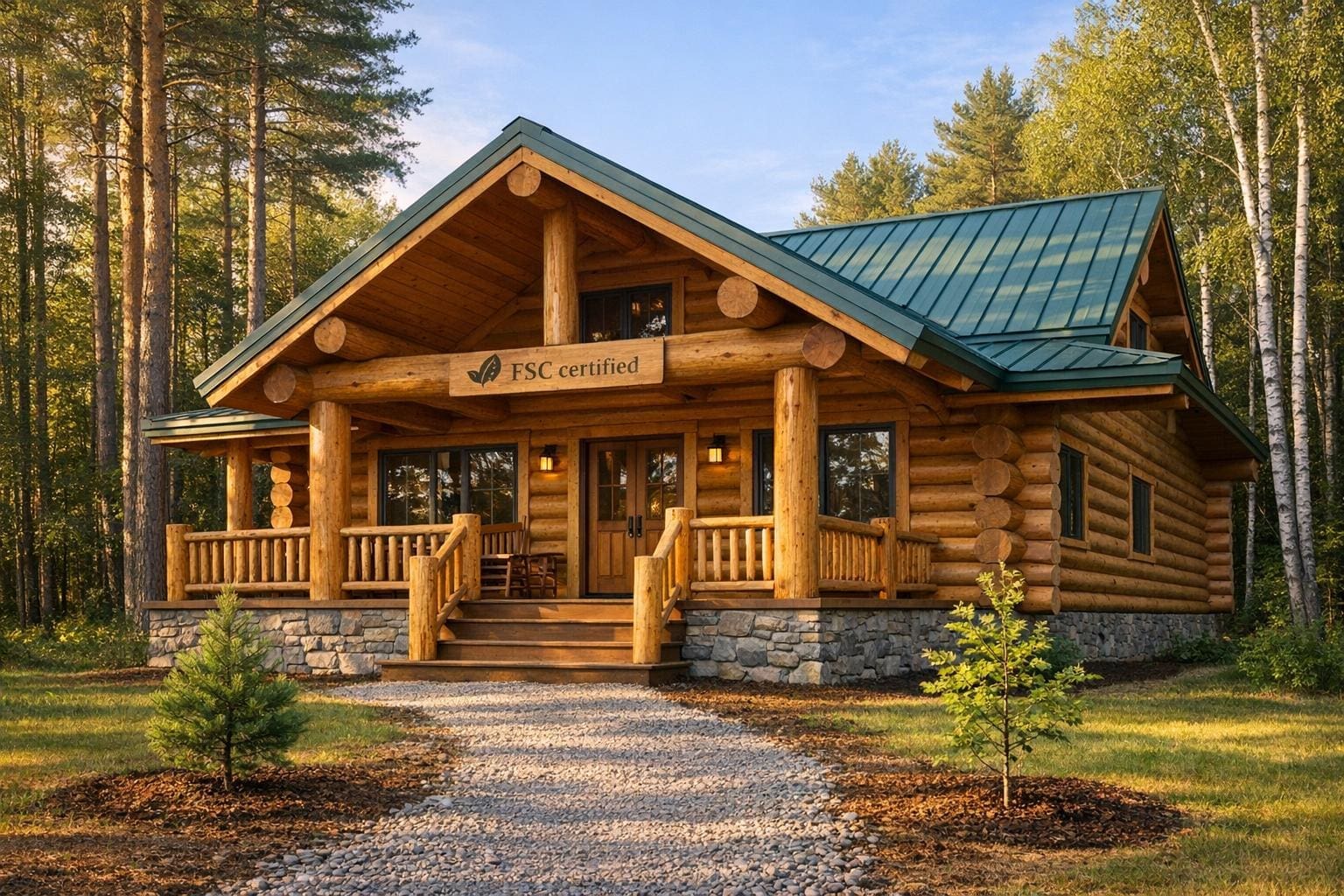
Klubhuset – a summerhouse built of FSC certified wood
sbb-itb-1086e16
1. Verified Sourcing and Responsible Forest Management
Building a log home kit requires a large amount of timber, which makes choosing responsibly sourced wood critical. One way to ensure this is through FSC certification. This certification guarantees that the wood used in your home meets strict, independently verified standards throughout its journey – from the forest to the finished structure.
FSC-certified wood is traceable through an independent Chain of Custody (CoC) system. This tracking ensures compliance with rigorous legal and ethical guidelines. As FSC International explains:
"FSC’s CoC system confirms every step from forest to final product is verified." [1]
The certification not only ensures legal compliance – preventing wood from being sourced from illegal or protected areas – but also adheres to FSC’s 10 core principles. These principles address critical issues like respecting Indigenous Peoples’ rights, preserving biodiversity, and promoting the welfare of local forest workers and communities.
For log home buyers in the U.S., this level of accountability ensures both environmental responsibility and lasting quality. To confirm the authenticity of materials, you can check supplier certificates in the FSC database and request the CoC number on invoices. If you have questions about sourcing, you can book a free consultation to discuss your project. When selecting wood, look for the "FSC 100%" label, which guarantees that all the wood comes from certified forests. Alternatively, the "FSC Mix" label indicates that at least 70% of the wood is certified or recycled, with the remainder meeting controlled wood standards.
FSC-certified wood typically costs between 0% and 15% more [2], a small price to pay for responsibly and transparently sourced materials.
2. Lower Carbon Footprint and Climate Impact
Log homes are built using timber, a renewable material that naturally stores carbon and is far more eco-friendly than concrete or steel. Trees absorb CO₂ as they grow, and when their wood is used in construction, that carbon stays locked in for the building’s lifespan. Essentially, your log home becomes a long-term carbon storage solution. If you’re ready to plan your eco-friendly build, you can request a free estimate for your project.
Using FSC-certified wood takes this a step further. Forests managed under FSC guidelines store up to 29% more carbon than those managed conventionally, according to FSC International [1]. This is achieved through stricter controls on harvesting, maintaining biodiversity, and protecting ecosystems.
"Wood is a renewable, recyclable resource that has a significantly lower carbon footprint compared to materials like steel and concrete." – FSC International [1]
The environmental benefits of wood are clear when compared to steel and concrete. Producing steel requires extreme heat and energy, while concrete manufacturing releases CO₂ as a byproduct. Wood, on the other hand, demands much less energy to process and continues to act as a carbon sink throughout its use [5].
Modern log home construction also focuses on reducing waste. Advanced cutting and joinery techniques ensure minimal material loss, and leftover wood – like shavings and chips – is often reused for mulch or biomass energy. This creates a near-zero waste process [5].
3. Material Performance, Comfort, and Durability
Using FSC-certified wood brings practical advantages to your home. Since FSC standards emphasize forest health and mature trees, the timber sourced from these forests is known for its consistency and reliability as a building material [2]. This consistency is especially beneficial in log home construction, where performance and durability matter most.
Solid log walls offer a natural ability to stabilize indoor temperatures by absorbing and releasing heat throughout the day. According to the National Association of Home Builders (NAHB):
"The exposed wood itself also helps regulate temperatures, with the wood absorbing heat energy during the day and radiating it at night to even out the temperature in the home." – NAHB [6]
In addition to temperature regulation, stacked logs act as both structural support and insulation, eliminating the need for traditional framing methods [6]. Modern log home packages, such as those available from Big Twig Homes, use precision-cut cedar and pine timber and advanced joinery techniques. This approach minimizes air leaks and moisture issues, ensuring a secure and efficient building envelope. This level of construction also provides protection against environmental changes.
Wood’s natural ability to regulate moisture helps prevent mold and mildew, which are common in tightly sealed conventional homes [5][7]. Additionally, the dense structure of log walls absorbs sound, creating a quieter living environment [3].
Durability is another strength of FSC-certified wood. Log and timber homes can be up to 15% to 20% more energy efficient than traditional homes, with Energy Star-certified homes achieving up to 30% greater efficiency than standard codes require [3]. The longevity of log structures is also impressive, with some historical examples in Europe and Russia lasting between 800 and 1,700 years [3]. This durability highlights the enduring value of building with high-quality, sustainable materials. This makes it the perfect time to build your own energy-efficient retreat.
4. Social and Economic Responsibility
FSC-certified wood isn’t just about sustainable forestry; it’s also about supporting fair labor practices and strengthening local economies. Since December 31, 2022, all FSC Chain of Custody certificate holders are required to follow strict labor standards. These include prohibiting child labor, eliminating forced labor, and ensuring workers’ rights to freedom of association and collective bargaining. Compliance with these standards is verified through independent third-party audits [8][9].
"FSC certificate holders must demonstrate conformance to the FSC Core Labour Requirements, which cover the abolition of child labor, elimination of all forms of forced or compulsory labor, elimination of discrimination with respect to employment and occupation, upholding freedom of association, and the effective recognition of the right to collective bargaining." – Forest Stewardship Council [8]
FSC certification also has a direct, positive impact on local communities. For example, research on 18 forest management units in Central Africa revealed that FSC-certified operations significantly increased the benefits and support provided to surrounding communities [10].
Another key aspect of FSC standards is the protection of Indigenous Peoples’ rights. Through a policy called Free, Prior, and Informed Consent (FPIC), logging activities can only proceed after obtaining the informed agreement of local communities. This safeguard is vital for the 250 million rural people who rely on healthy forests for their livelihoods [4]. When you choose FSC-certified wood for your log home, you’re investing in a system that prioritizes ethical practices and community well-being at every stage of the process.
5. Home Value, Design Appeal, and Long-Term Equity
Choosing FSC-certified wood isn’t just an ethical decision – it’s a savvy financial move that appeals to buyers looking for eco-friendly credentials. The certification provides third-party verification that the materials have been responsibly sourced, offering peace of mind to environmentally conscious homeowners [2].
From a design standpoint, log homes crafted with FSC-certified wood boast a charm that traditional construction methods can’t match. The natural warmth of solid timber and the character of hand-scribed logs create a rustic, inviting atmosphere. FSC certification also extends to specialty woods, such as tropical hardwoods often used in outdoor furniture and exterior finishes, allowing homeowners access to high-quality materials without sacrificing sustainability [2]. These unique design elements don’t just look good – they contribute to the home’s long-term value.
Log homes are known for their durability and energy efficiency, which further enhances their equity over time. With a track record of lasting centuries – some European log homes have stood for over 800 years [3] – this construction style is built to endure. And as Mike Gingras of Seven North Log Homes points out, "Today we can build a log and timber home to be 15 to 20 percent more energy efficient than a conventional home" [3]. This means lower utility bills and greater savings over the years. While FSC-certified wood may come with a slightly higher price tag, the energy savings and the home’s longevity more than make up for it. Plus, solid timber contributes to improved indoor air quality, a feature increasingly valued in today’s real estate market [6].
At Big Twig Homes, cedar log home kits are designed to maximize these long-term advantages. Combining durability, energy efficiency, and timeless appeal with sustainable sourcing, FSC-certified wood is the perfect choice for building a log home that stands the test of time.
Comparison Table
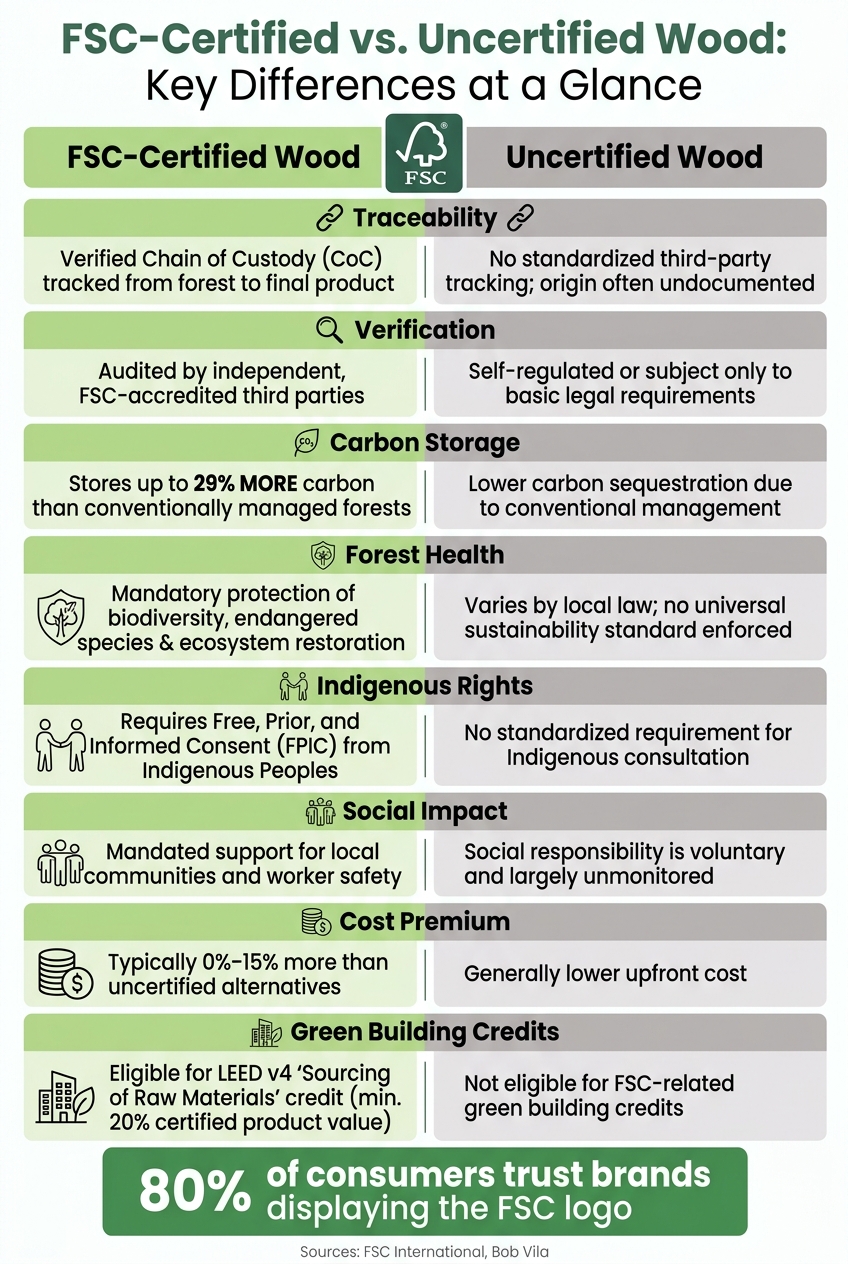
FSC-Certified vs. Uncertified Wood: Key Differences at a Glance
FSC-certified and uncertified wood differ in several key ways. Here’s a quick breakdown of how they stack up:
| Factor | FSC-Certified Wood | Uncertified Wood |
|---|---|---|
| Traceability | Verified Chain of Custody (CoC) tracked from forest to final product [1] | No standardized third-party tracking; origin often undocumented |
| Verification | Audited by independent, FSC-accredited third parties [2] | Self-regulated or subject only to basic legal requirements |
| Carbon Storage | Stores up to 29% more carbon than conventionally managed forests [1] | Lower carbon sequestration due to conventional management practices |
| Forest Health | Mandatory protection of biodiversity, endangered species, and ecosystem restoration [1] | Varies by local law; no universal sustainability standard enforced |
| Indigenous Rights | Requires Free, Prior, and Informed Consent (FPIC) from Indigenous Peoples [1] | No standardized requirement for Indigenous consultation or community rights |
| Social Impact | Mandated support for local communities and worker safety [2] | Social responsibility is voluntary and largely unmonitored |
| Cost Premium | Typically 0%–15% more than uncertified alternatives [2] | Generally lower upfront cost |
| Green Building Credits | Eligible for LEED v4 "Sourcing of Raw Materials" credit (minimum 20% certified product value) [1] | Not eligible for FSC-related green building credits |
This table underscores the advantages of FSC-certified wood when it comes to sustainability, environmental responsibility, and community well-being.
One standout fact: 80% of consumers place their trust in brands displaying the FSC logo [1]. For a luxury log home – an investment meant to last decades – this credibility can make a big difference, not just at the time of purchase but also when it comes to resale value. Considering the modest cost increase, FSC certification offers a straightforward way to enhance both the environmental and financial value of your log home project. This is especially true when using log home build kits designed for efficiency and sustainability.
Conclusion
FSC-certified wood offers practical advantages, including verified sourcing, reduced carbon footprint, reliable performance, positive social impact, and enhanced home value. These factors make it a smart choice for building a log home.
While the price of FSC-certified wood may be 0%–15% higher [2], the added benefits – like traceability, improved indoor air quality, and long-term value – make it a worthwhile investment. As Bob Vila explains:
"When taking into account the costs of operating sustainably and ethically, as well as enriching the lives of everyone impacted by forestry operations, the answer [to whether it is worth the cost] is typically yes." – Bob Vila [2]
The modest premium is outweighed by the meaningful advantages it provides. For your log home project, consider working with Big Twig Homes. Their customizable cedar log home packages combine high-quality materials with expert support throughout the design and construction process.
When selecting materials, look for the FSC "checkmark and tree" logo on lumber or finished wood products. Don’t hesitate to ask your builder about certified sourcing. These early planning decisions can create a lasting impact – not just on your home, but on the forests that make it possible. Choose FSC-certified wood and build a home that benefits both your family and the environment.
FAQs
How do I verify lumber is truly FSC-certified?
To verify if lumber is FSC-certified, you can use tools like the FSC Public Certificate Search or FSC Search. Simply enter the certificate number or relevant keywords. Make sure the certification is valid and issued by an accredited body. Another option is to confirm through the issuing organization’s online portal or by contacting them directly. Always ensure the certification aligns with both the product and the supplier.
Which FSC label should I look for (FSC 100% vs. FSC Mix)?
When shopping for wood products, keep an eye out for the FSC 100% label. This guarantees that all the wood comes exclusively from forests certified by the Forest Stewardship Council (FSC), meeting strict standards for responsible forestry. Alternatively, the FSC Mix label signifies a blend of materials, including FSC-certified wood, recycled content, or wood from controlled sources. Choose the label that matches your environmental priorities.
Can FSC wood help my log home qualify for LEED credits?
Yes, incorporating FSC-certified wood into your log home can help it qualify for LEED credits. The LEED (Leadership in Energy and Environmental Design) program acknowledges FSC-certified materials as part of sustainable building practices. By using wood certified by the Forest Stewardship Council (FSC), you’re supporting environmentally responsible construction while meeting LEED’s criteria for sustainable materials.