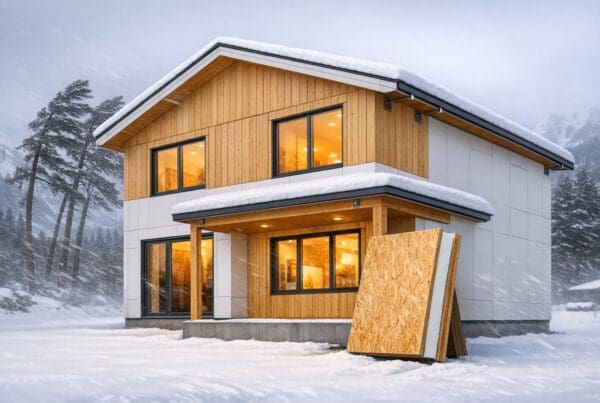

Panelized framing is a construction technique where pre-made wall, floor, and roof panels are manufactured in a factory and delivered to the site for quick assembly. This method combines multiple construction steps – framing, insulation, sheathing, and air-sealing – into one process, significantly cutting construction time and labor costs.
Key benefits include:
- Faster builds: Saves up to 55% of construction time, enclosing homes in days instead of weeks.
- Lower labor needs: Reduces required labor by 130 hours for a 2,500-square-foot home, cutting costs by around $3,440.
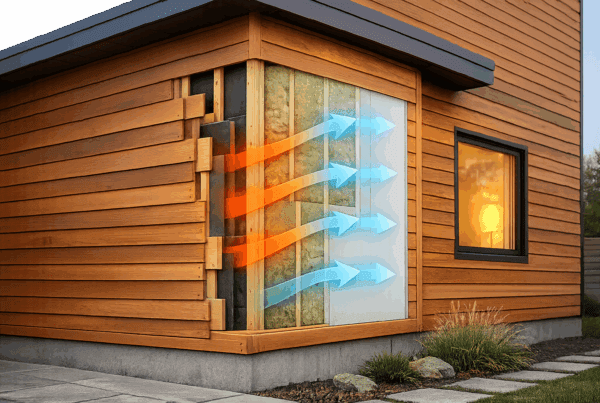
- Energy efficiency: Factory-made panels create a tightly sealed building envelope, reducing air movement and thermal bridging.
- Reduced waste: Material waste on-site can drop by 50%, simplifying cleanup and disposal.
Big Twig Homes specializes in panelized framing with SIP (Structural Insulated Panel) systems, offering pre-cut packages tailored to specific home designs. Their panels integrate insulation and air barriers, achieving high energy ratings (R-20 to R-30) and long-term durability. With proper planning, accurate orders, and timely deliveries, this approach ensures faster, more efficient construction with fewer delays.
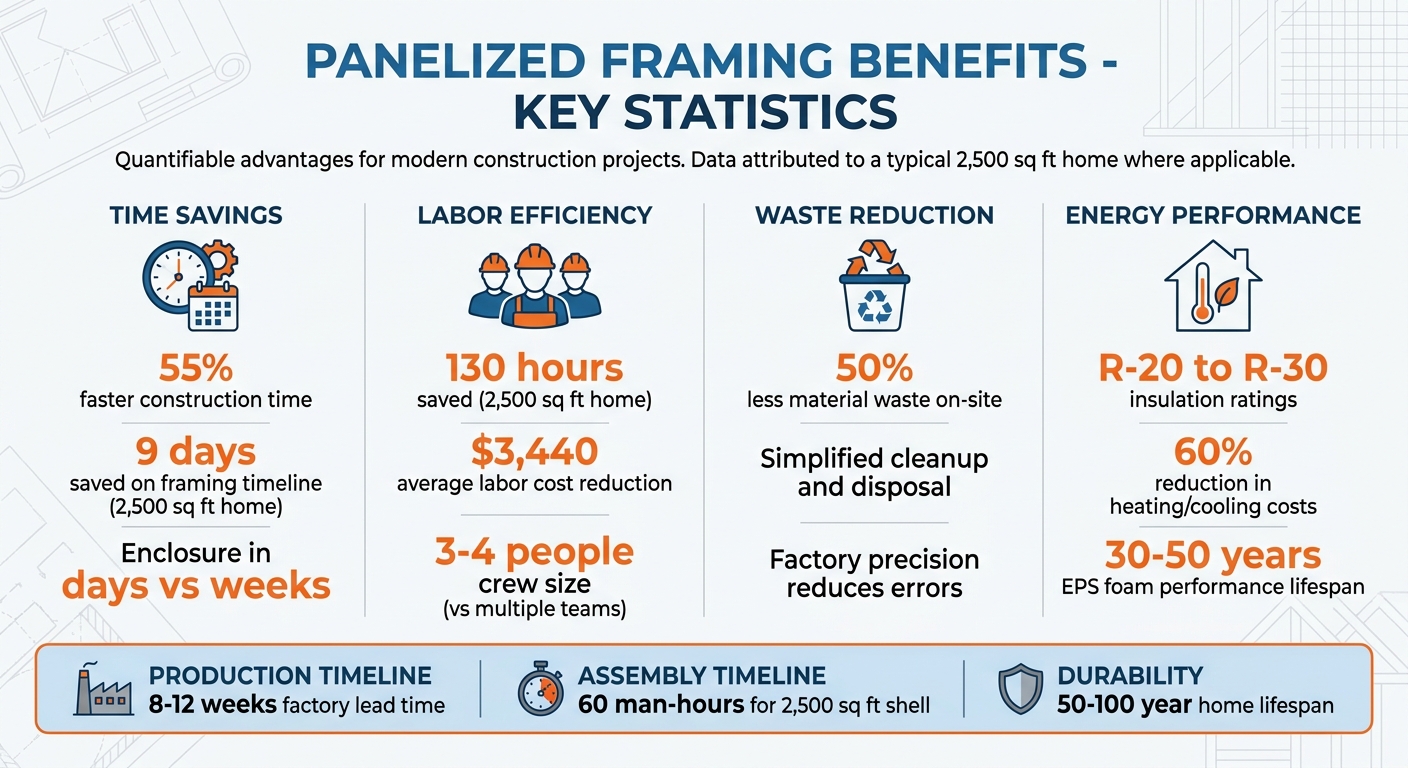
Panelized Framing Time and Cost Savings Statistics
Panelized Construction: 5 Benefits and How It Works
sbb-itb-1086e16
How Panelized Framing Saves Time
Panelized framing simplifies the construction process by combining framing, sheathing, insulation, and air-sealing into one streamlined step. Unlike traditional stick-built homes, which rely on separate crews for each task – often causing delays as teams wait for others to finish – panelized systems allow these steps to happen simultaneously. This approach cuts down on scheduling conflicts and minimizes downtime on-site, leading to faster builds, reduced labor demands, and smoother workflows [2].
Shorter Construction Schedules
For a typical 2,500-square-foot home, panelized framing shaves about 9 days off the framing and inspection timeline [4]. Pre-cut panels, complete with openings for doors and windows, eliminate the need for on-site measuring and cutting.
"I think the first benefit is the speed at which you can assemble them… Often, a home can be enclosed within days or even hours." – Stephen Munn, General Manager, Insulspan [1]
This rapid enclosure allows interior trades like electrical and plumbing to start their work much earlier, protecting the structure from potential weather damage and ensuring steady progress [2].
Lower Labor Requirements
Structural insulated panels (SIPs) are 55% faster to install, saving approximately 130 labor hours on a 2,500-square-foot home [2][4]. Their factory-made precision reduces the need for on-site adjustments, enabling a smaller crew – just 3 to 4 people – to handle tasks that would typically require multiple specialized teams [2].
These labor efficiencies translate into real savings. Builders report cutting labor costs by an average of $3,440 per home, thanks to streamlined framing, electrical, and insulation processes [4]. Shortened construction timelines also mean lower interest costs on building loans, as homes can be occupied sooner [4].
Better Project Workflow
Factory-built panels deliver consistent quality and precise measurements, reducing the need for callbacks and rework. On-site material waste can drop by as much as 50% [2], cutting down on time spent managing excess materials, cleaning up, and arranging waste disposal. Additionally, since panelized components are built indoors, they can be installed quickly during brief breaks in bad weather, ensuring that interior work continues uninterrupted [3].
This efficient workflow not only speeds up construction but also supports energy-efficient building solutions by minimizing delays and disruptions on-site.
Big Twig Homes‘ Panelized Framing and SIP Panel Systems
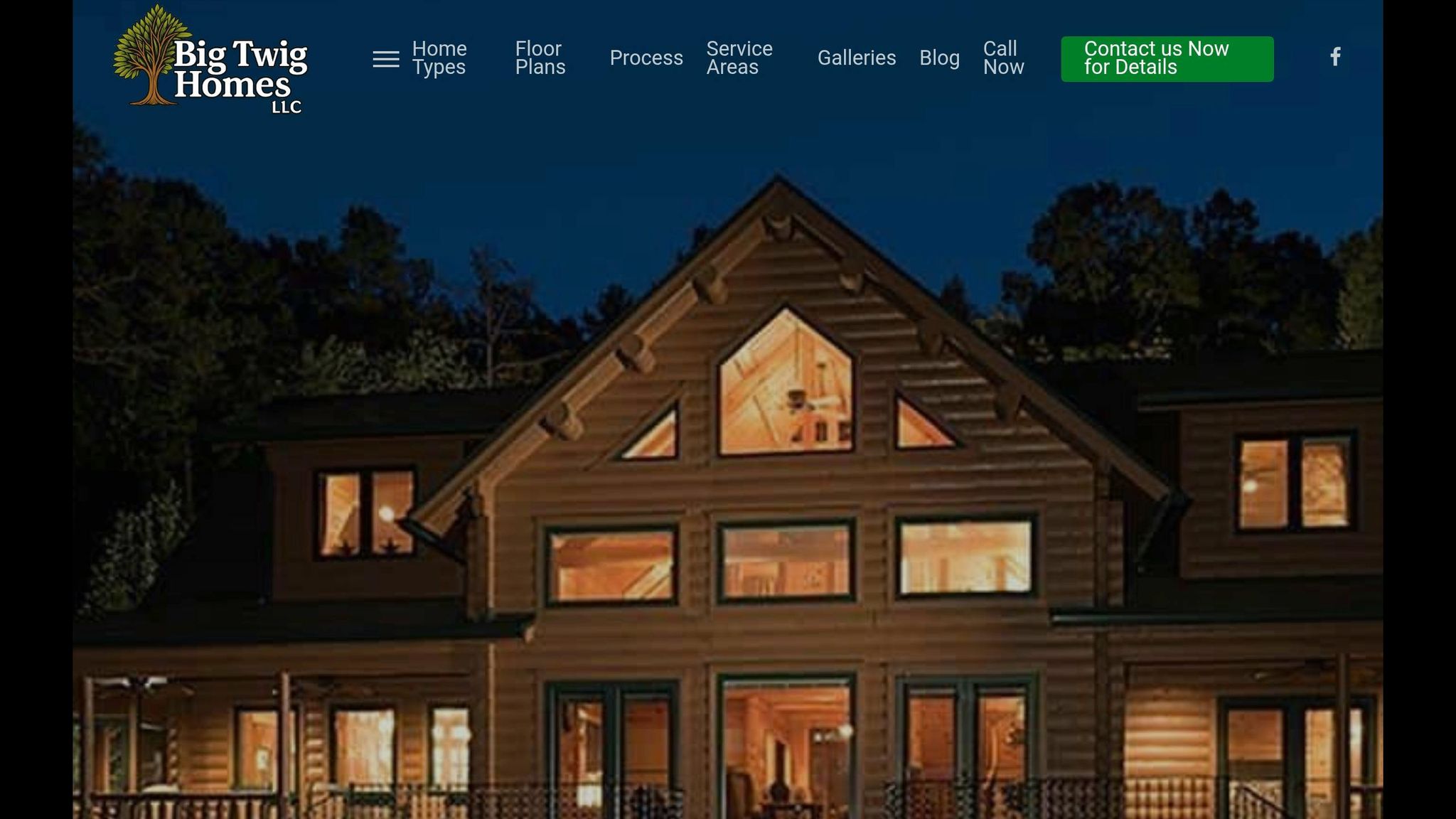
Big Twig Homes specializes in custom cedar log home packages that incorporate panelized framing and SIP (structural insulated panel) systems, creating faster builds with improved energy efficiency. By teaming up with EPS Building Systems, they offer panels that combine framing, insulation, and an air barrier in one solution. This method is particularly effective for hybrid log homes, which feature a cedar log exterior and a SIP interior. The result? Reduced wood usage, less need for specialized labor, and quicker assembly – all while boosting energy performance.
Custom Panelized Framing Packages
Big Twig Homes designs each panelized package to match the specific requirements of the home design and site. These packages include pre-cut cedar logs and SIP panels, all manufactured under controlled conditions to ensure precision and quality. This approach allows builders to focus on the creative aspects of the project rather than the repetitive tasks of framing. To make the process even smoother, Big Twig Homes provides technical support to contractors and builders during installation, helping ensure panels are placed efficiently and correctly. This support ensures that the time-saving benefits are fully realized at every step of the build.
Energy Performance with EPS SIP Panels
Big Twig Homes uses SIPs made with expanded polystyrene (EPS) foam cores, sandwiched between oriented strand board layers, to achieve excellent thermal insulation. These panels are designed to reduce air leakage and heat transfer, resulting in a tighter building envelope that keeps indoor temperatures stable. With energy ratings typically ranging from R-20 to R-30, these panels can lower heating and cooling costs by as much as 60% [5]. Additionally, the EPS foam used in these panels is not only chemically inert and fully recyclable but also maintains its performance for 30 to 50 years [6].
Material Supplier Partnerships
Big Twig Homes’ partnerships with trusted suppliers ensure consistent quality and reliability. Their collaboration with EPS Building Systems guarantees a steady supply of factory-made panels ready for immediate installation. They also work with Moosehead Cedar Log Homes to source northern white cedar logs, prized for their natural durability and resistance to moisture. These partnerships provide access to high-quality materials, supported by manufacturer warranties and technical expertise, helping projects stay on track and meet high standards of craftsmanship.
How to Use Panelized Framing: Step-by-Step Process
This step-by-step process highlights how panelized framing can save significant time during construction.
Design and Planning Phase
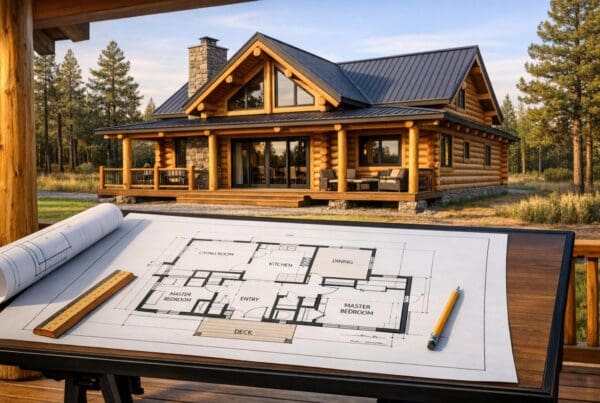
Everything begins with a clear concept. Collaborating with a dealer or architect, you’ll determine your project’s goals, including square footage and budget limits. From there, the design team creates 2D floor plans, refining them based on your feedback. During this phase, you’ll finalize choices for products, materials, and colors. These plans are then converted into detailed 3D framing models using specialized CAD software like BuildersCAD or MiTek E-frame. These tools ensure precise alignment of structural components such as floor joists and wall studs while accounting for load-bearing points. Local engineering reviews confirm that the plans comply with regional building codes, covering essentials like snow loads, wind resistance, and energy efficiency. Meanwhile, the building site is prepped with excavation and utility setups, and the finalized plans are submitted for permits.
"The design and planning stage is the most time-intensive, since it involves finalizing plans, financing, and permits." – Barden Building Products [7]
Finalizing all material and color choices at this stage ensures the manufacturing team can properly organize and label components for assembly. Once permits are secured, the project progresses to factory production.
Factory Production Phase
Producing panels in a controlled factory environment eliminates weather delays and reduces on-site errors. Precision machinery cuts each piece to the exact dimensions specified in your floor plan. For SIP systems, insulation is sandwiched between OSB layers in the factory, creating a fully assembled wall system with excellent airtightness.
"Timbers are fabricated and fit together in a mill… That process mirrors the SIP process, where the SIPs are manufactured and cut to size and shape in the factory." – Stephen Munn, General Manager, Insulspan [1]
Each panel is labeled for its specific placement, which minimizes mistakes during assembly. For example, constructing a 2,500-square-foot panelized shell takes about 60 man-hours [8]. With the panels ready to go, the focus shifts to on-site assembly.
On-Site Assembly Phase
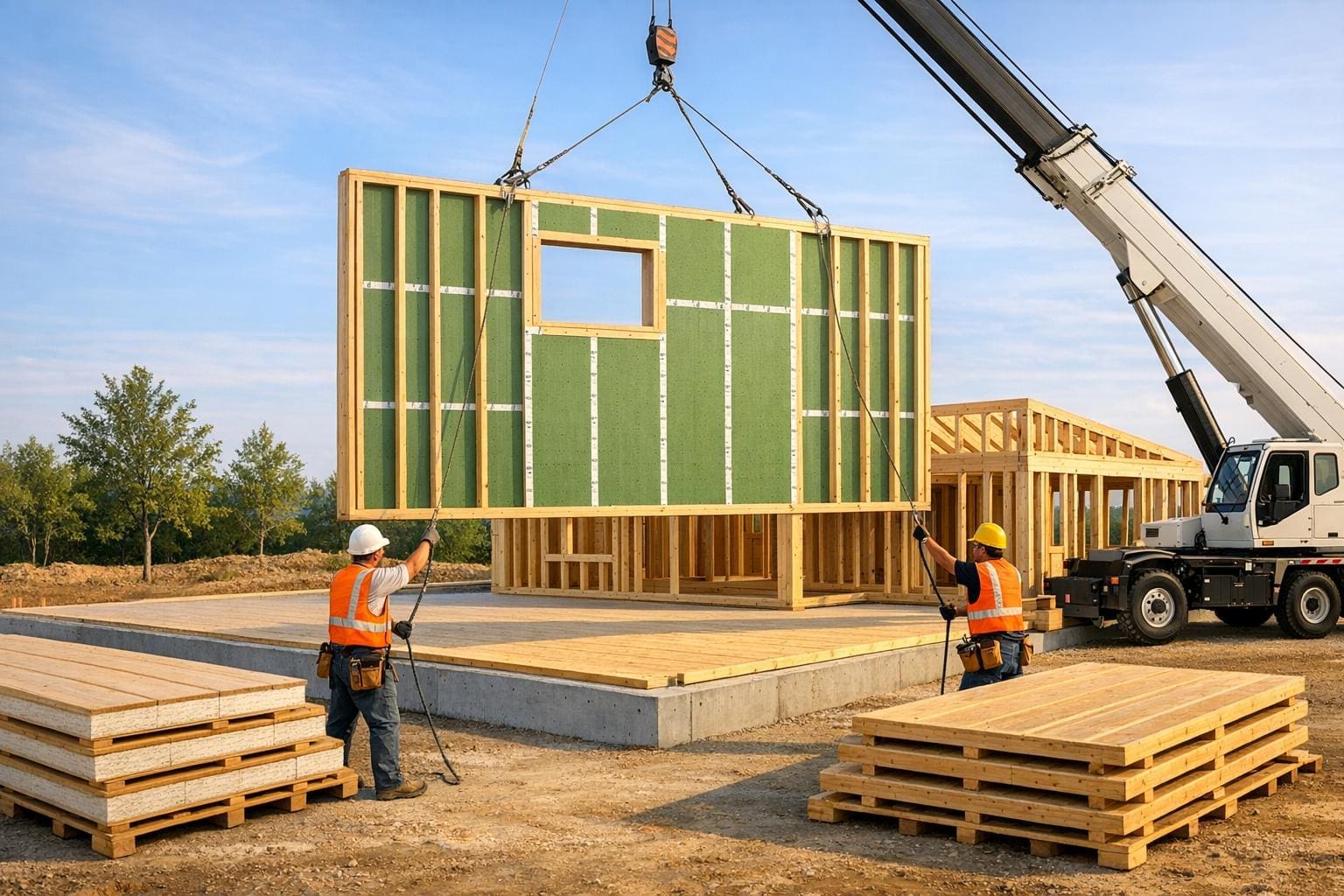
Once the panels arrive on-site, the truck driver provides a set of plans with clearly marked panel numbers, making the assembly process feel like piecing together a 3D puzzle [9]. Each component is designed for a specific spot, and following the numbering system ensures an accurate fit. SIP panels, weighing less than 4 pounds per square foot, are light enough to handle manually. However, larger sections may require a crane for quicker installation of walls and roof panels.
A perfectly level foundation is critical to avoid alignment problems, as panels are manufactured with tolerances as tight as 1/16th of an inch. This precise assembly allows for a weather-tight enclosure to be completed in one to two weeks. Avoid cutting panels on-site unless absolutely necessary, as factory-prepared openings for windows and doors help maintain sealed edges and energy efficiency.
Ways to Maximize Time Savings with Panelized Framing
Panelized framing is already known for its efficiency, but with careful planning, weather-resistant production, and expert guidance, you can take that efficiency to the next level.
Plan Accurate Orders and Delivery Schedules
Getting your panel orders right from the start is critical. Pre-labeled, factory-cut panels eliminate the need for on-site adjustments, reducing waste and labor. On the other hand, generic panels that require cutting on-site can slow things down and increase the chance of errors. To avoid this, confirm details like panel thickness, window placements, and exterior cladding choices before placing your order.
Keep in mind that panel production typically requires an 8- to 12-week lead time, depending on material availability and the complexity of your design [6]. Timing is everything – coordinate delivery so that panels arrive just as your foundation is ready and your crew can install them. Avoid storing panels on-site for extended periods to prevent moisture exposure or accidental damage.
"We are here to provide technical support to your General Contractor or Builder." – Big Twig Homes [6]
Work closely with your supplier’s delivery team to ensure smooth logistics. Specialized transportation methods help panels arrive in perfect condition, ready for immediate use.
Reduce Weather Delays with Factory-Built Panels
One of the biggest advantages of factory-built panels is their ability to sidestep weather-related delays. Since panels are manufactured indoors, rain, snow, or extreme heat won’t disrupt the process. Once delivered, these panels can enclose a structure in just days – or even hours [1]. This means you can achieve a watertight envelope almost immediately.
Many panels come with factory-fitted membranes, offering instant weather resistance as soon as they’re installed [10]. This rapid enclosure not only protects the interior from moisture but also allows crews to start interior work much sooner.
"The aim was to show that a weather resistant building envelope in a single day is possible." – A. Proctor Group [10]
To maximize efficiency, schedule deliveries so panels are unloaded directly onto the foundation. This minimizes on-site storage time and reduces the risk of weather-related damage before installation.
Use Big Twig Homes’ Builder Network and Support
Big Twig Homes has a network of builders who specialize in SIP and panelized framing systems. These professionals are familiar with handling pre-cut panels, which helps reduce mistakes and shortens the learning curve.
Engage with the design team early to optimize your floor plans for panelized construction. This can prevent on-site modifications, saving both time and materials. For larger projects, like tract housing or apartment complexes, Big Twig Homes offers tailored packages that streamline construction and boost your return on investment.
Their technical support team is also available to help address site-specific challenges, such as uneven terrain that might require specialized foundation methods. By incorporating these strategies, you can not only speed up construction but also maintain the energy efficiency standards that are a hallmark of Big Twig Homes’ custom cedar log and SIP designs. These steps can make your building process smoother and more efficient.
Conclusion
Panelized framing speeds up construction while maintaining high standards of quality and energy efficiency. With pre-cut components, factory precision, and integrated insulation, these systems help reduce errors, minimize waste, and keep build timelines predictable. This streamlined process is central to Big Twig Homes’ mission, where expert craftsmanship turns designs into reality.
Big Twig Homes specializes in custom solutions that utilize pre-cut cedar and SIP systems. Their technical support ensures you can tackle site-specific challenges while adhering to the durability standards that allow these homes to last 50 to 100 years [5].
These systems offer clear benefits, such as improved energy savings and enhanced structural strength. Whether you’re building custom home kits or managing larger developments, panelized framing supports sustainability and long-term performance. As highlighted earlier, early planning and well-coordinated deliveries are essential to fully leverage these advantages.
The keys to success with panelized framing are early planning, precise ordering, and coordinated delivery. Ensuring your foundation is ready when panels arrive and working with experienced builders can significantly improve efficiency. The 8- to 12-week production lead time [6] becomes an asset when used to prepare your site thoroughly.
From the initial design stage to on-site assembly, every step benefits from this organized approach. Big Twig Homes provides the materials, expertise, and guidance needed to make homebuilding efficient and energy-conscious.
FAQs
What site prep is required before the panels arrive?
Before the panels are delivered, make sure the site is fully prepared. Start by checking that the foundation is both level and square, as the panels are built to exact specifications. Getting the measurements right is key to ensuring the installation goes smoothly and efficiently.
Do panelized SIP systems limit my home design options?
Panelized SIP systems offer plenty of freedom when it comes to home design. They’re suitable for a wide range of styles, from luxury homes to multifamily buildings and energy-conscious designs. With these systems, you can craft custom layouts without sacrificing efficiency or eco-friendly benefits.
What mistakes can delay a panelized framing build?
Delays in panelized framing projects often stem from a few avoidable errors. One major issue is poor planning and coordination, which can cause logistical headaches or mismatched prefabricated components. Another common problem is inaccurate measurements or mishandling of SIP (Structural Insulated Panels) during installation, leading to costly on-site adjustments.
To keep the project on track, focus on a few key areas:
- Proper sequencing: Ensure tasks are scheduled in the right order to avoid bottlenecks.
- Accurate measurements: Double-check dimensions to prevent alignment issues.
- Clear communication: Maintain open lines of communication among the construction team to address potential problems early.
By paying attention to these details, you can significantly reduce the chances of delays and keep the build running smoothly.