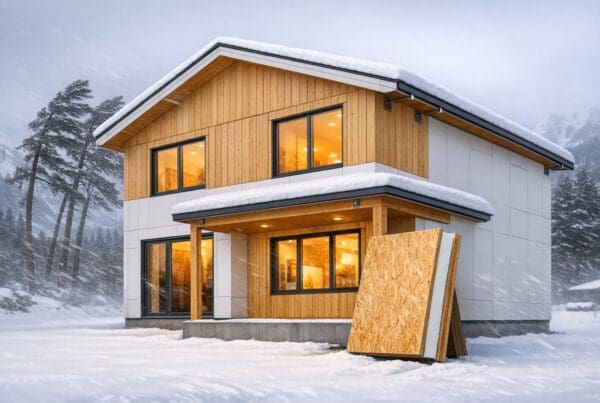

Structural Insulated Panels (SIPs) are transforming home construction by offering a faster, energy-efficient, and durable alternative to traditional building methods. These factory-made panels combine insulation, structural strength, and sheathing into one product, simplifying the construction process while reducing waste and labor needs. Here’s what you need to know:
- What are SIPs? Pre-engineered panels made of a rigid foam core (EPS or GPS) sandwiched between Oriented Strand Board (OSB) facings. They replace multiple components like studs, insulation, and vapor barriers.
- Why use SIPs? Homes built with SIPs are up to 50% more energy-efficient, cut air leakage by 90%, and reduce labor needs by 55%.
- Eco-friendly benefits: SIPs generate less waste, can cut CO₂ emissions by 45%, and offer energy payback in just over 5 years.
- Applications: Used in walls, roofs, and floors for both residential and commercial projects, including high-performance and LEED-certified buildings.
- Key features: Airtight construction, pre-cut precision, and high R-values (R-18 to R-40) for superior insulation.
SIPs are reshaping the construction industry by addressing rising energy costs, labor shortages, and the demand for efficient, durable homes. Whether for walls, roofs, or floors, they provide a streamlined solution that saves time and energy while delivering long-lasting performance.
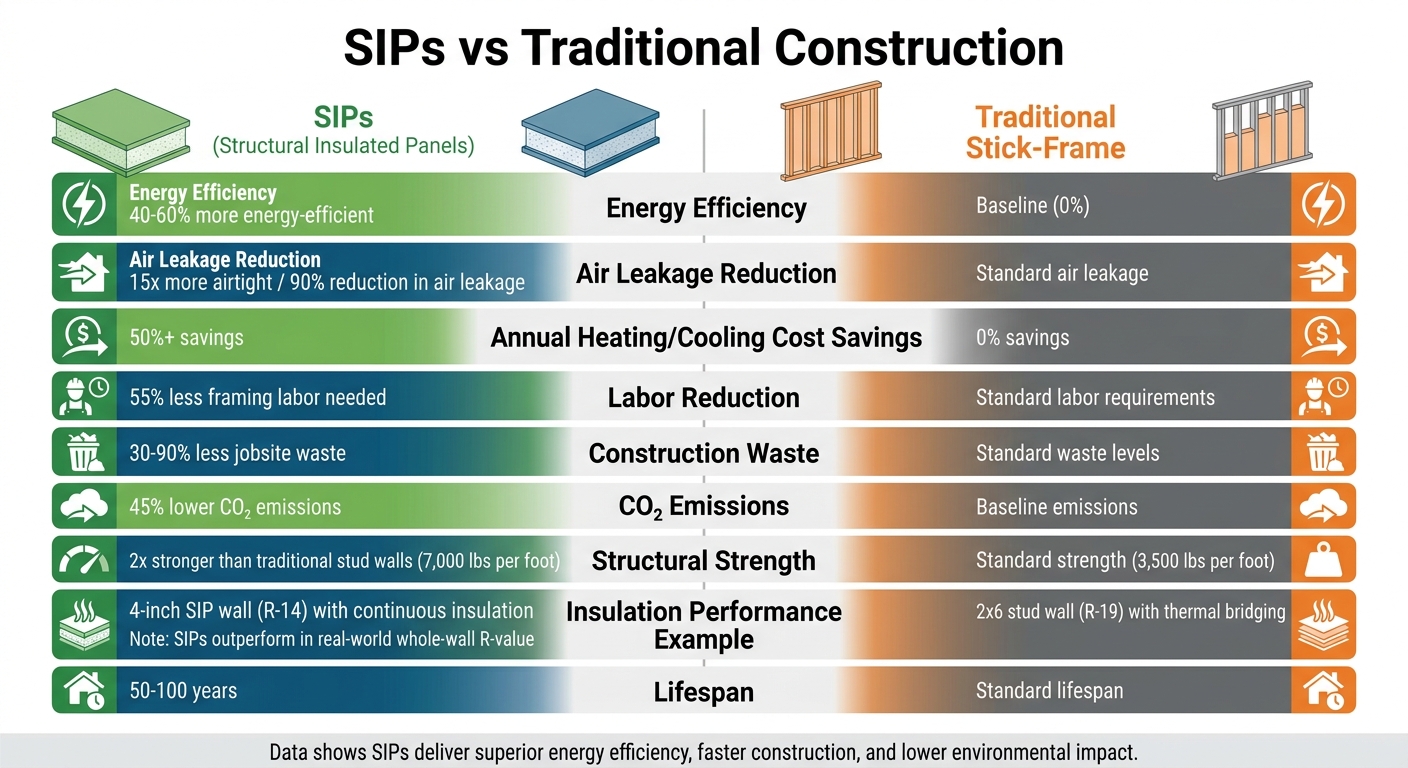
SIPs vs Traditional Construction: Energy Efficiency and Performance Comparison
EVERYTHING You NEED To Know About SIPs | Structural Insulated Panels | @EcoPanelsofTennessee
sbb-itb-1086e16
How Big Twig Homes Makes SIPs
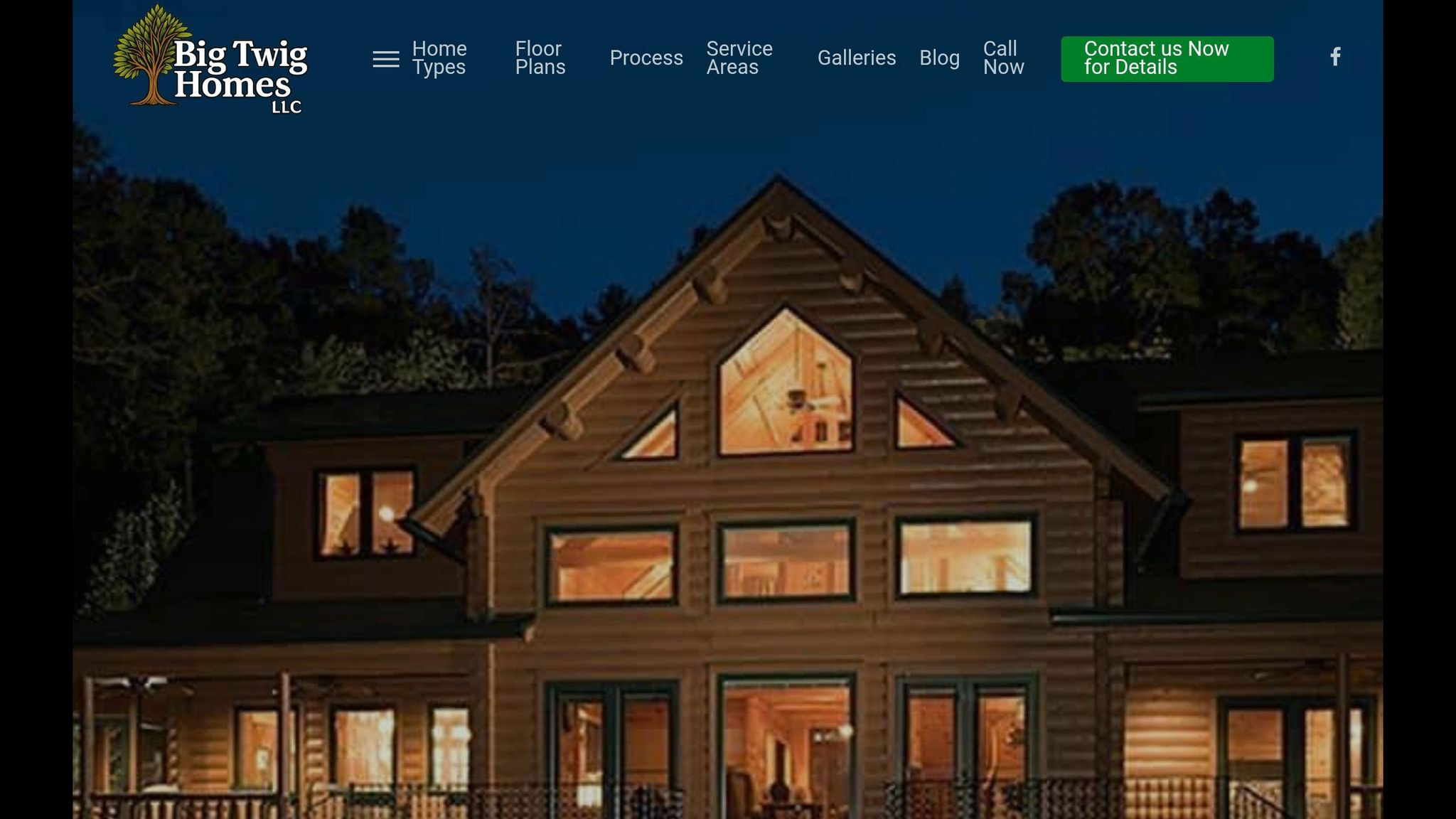
Big Twig Homes has been working with EPS Building Systems since 2005 to provide high-quality SIP panels for sustainable construction for both residential and commercial projects [6]. These panels are produced in tightly controlled factory conditions, ensuring every piece meets exact specifications before leaving the facility. This attention to detail means the panels arrive at your job site ready to install, reducing the likelihood of errors.
Materials Used in SIP Construction
At the heart of every SIP is a core made from Expanded Polystyrene (EPS) or Graphite Polystyrene (GPS) foam [7][9]. These foam cores not only offer excellent thermal resistance but also contribute to the structural strength of the panel. The foam is sandwiched between two layers of Oriented Strand Board (OSB) or plywood, creating a strong "sandwich" structure. In this design, the OSB layers handle tension and compression, while the foam core absorbs shear forces [7][8].
Big Twig Homes offers SIP wall panels in different thicknesses, providing R-values of R-18, R-26, R-33, or R-40 [7]. The foam cores are treated with a non-toxic, EPA-approved mineral additive to protect against carpenter ants and termites [7]. During production, the panels are pre-cut with built-in "chases", which are channels in the foam that allow electricians to run wires without needing to drill through studs [7]. Other materials used for assembly include panel screws, SIP sealing mastic, low-expanding foam sealant, and SIP tape for roof joints [7].
This combination of carefully chosen materials and precise manufacturing ensures each panel performs as expected.
Quality Control and Manufacturing Process
Big Twig Homes takes precision seriously, combining premium materials with advanced manufacturing techniques to ensure top performance. Using engineered blueprints and CAD technology, every panel is cut to exact specifications. This guarantees that all components fit perfectly when the SIP package arrives [6][7]. The panels are also tested to be twice as strong as traditional stud walls, withstanding up to 7,000 pounds per foot [7].
To support builders and contractors, Big Twig Homes provides technical assistance during the installation process [9]. This combination of precise manufacturing and hands-on support helps create homes designed to last 50 to 100 years [6].
Key Benefits of SIPs for Energy-Efficient Homes
Better Insulation Performance
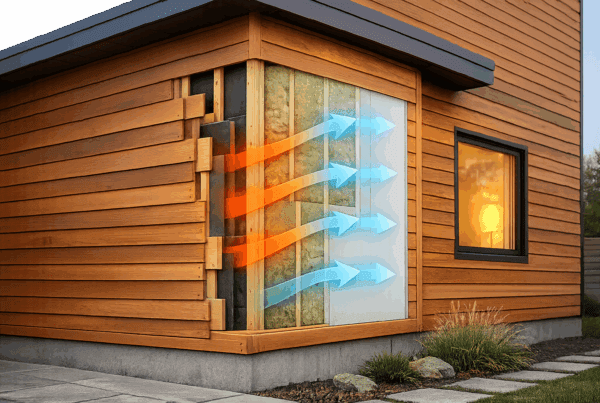
One of the standout advantages of Structural Insulated Panels (SIPs) is their continuous insulation across the entire panel. Unlike traditional stick-frame walls, which have studs every 16 or 24 inches that create thermal bridges (areas where heat escapes), SIPs eliminate this issue. Thanks to their solid foam core that extends from edge to edge, they provide a consistent thermal barrier [2][5].
For example, a 4-inch SIP wall rated at R-14 often outperforms a 2×6 stud wall with R-19 fiberglass insulation in real-world applications [2]. Why? Because the whole-wall R-value of SIPs accounts for the thermal bridging losses that traditional framing cannot avoid. In fact, homes built with SIPs can be 40% to 60% more energy-efficient than those using conventional wood framing [11]. This efficiency translates into significant savings, with homeowners potentially cutting annual heating and cooling costs by 50% or more [7][1].
SIPs also excel in airtightness. Homes built with SIPs can be up to 15 times more airtight than traditional stick-frame homes [10][7]. This tight envelope allows homeowners to control airflow, preventing the loss of conditioned air through cracks and gaps. As a result, HVAC systems can often be downsized, reducing both upfront equipment costs and ongoing energy expenses [7][2]. Beyond improving energy efficiency, SIPs simplify the construction process, making them a time-saving option for builders.
Faster Construction Times
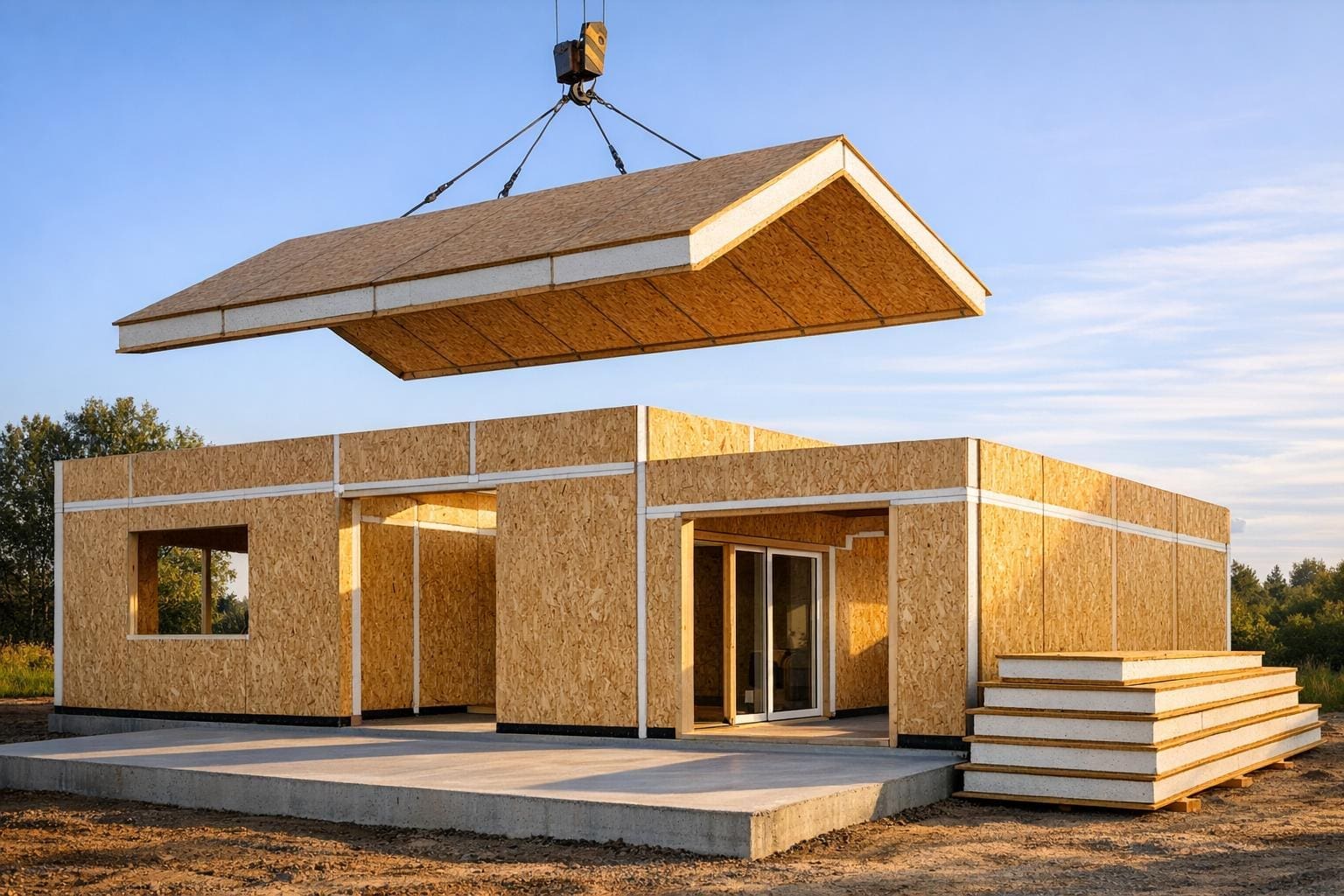
SIPs arrive at the job site pre-cut and ready for assembly, streamlining the entire construction process. Unlike traditional framing, which requires separate steps for framing, insulating, and sheathing, SIPs combine all three into one. This efficiency can reduce framing labor needs by as much as 55% [1][2], directly lowering labor costs and speeding up project timelines.
The faster construction process also reduces the risk of weather-related delays, keeping projects on schedule and protecting your investment. Quicker builds not only save money but also reduce waste and energy use on-site, making the entire process more efficient.
Sustainability and Lower Environmental Impact
SIPs generate significantly less waste compared to traditional building methods. Since panels are factory-cut to precise dimensions, jobsite waste can be reduced by 30% to 90% [11][12]. In contrast, stick framing often produces large amounts of scrap material, requiring multiple dumpsters for disposal.
The environmental benefits of SIPs extend far beyond the construction phase. Homes built with SIPs can save 45% more CO2 than traditional stick-framed houses [2], with energy and greenhouse gas payback periods of 5.1 years and 3.8 years, respectively [2]. Additionally, producing EPS insulation – the foam core used in many SIPs – requires 24% less energy than manufacturing fiberglass insulation of equivalent R-value [5].
SIPs can also contribute up to 47 points toward LEED certification, with the building envelope alone potentially achieving basic certification [11]. The oriented strand board (OSB) used in SIPs is sourced from managed forests and uses less wood pulp than traditional lumber [5]. Meanwhile, the foam cores are inert and free of harmful chemicals like formaldehyde, ensuring a healthier indoor environment while maintaining their insulation performance over time [5].
Where SIPs Are Used in Construction
SIPs for Walls, Roofs, and Floors
Structural Insulated Panels (SIPs) play a role in nearly every key building component. For walls, they combine structural framing, insulation, and exterior sheathing into one streamlined solution. Thanks to the OSB (Oriented Strand Board) facing, mounting cabinets or fixtures becomes much simpler since there’s no need to locate studs [5].
When it comes to roofs, SIPs provide a conditioned attic space, eliminating the need for traditional ventilation. This effectively extends the living area into the attic. Additionally, SIP roof panels can span long distances with minimal support, reducing or even removing the need for interior beams or purlins [2].
For floors, SIPs deliver both structural integrity and high insulation performance. This combination helps cut down on heat loss and prevents floors from feeling cold [3].
SIPs in Residential and Commercial Projects
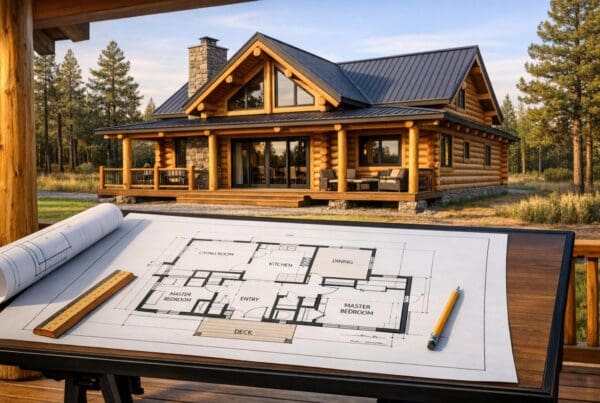
SIPs are widely used in both residential and commercial construction. In residential projects, they are found in single-family homes, custom cedar log homes, timber frame buildings, and multifamily apartments. SIP panel packages are specifically designed to integrate seamlessly with custom cedar log home kits, creating a well-insulated, high-performance building envelope.
In commercial and agricultural settings, SIPs are equally effective. They can function as primary load-bearing systems or as insulated curtain walls in steel-framed structures. SIPs have proven successful in schools, warehouses, light commercial buildings, and agricultural facilities. On top of that, commercial projects using SIPs may qualify for energy tax incentives – up to $5 per square foot for commercial buildings or between $2,500 and $5,000 per dwelling unit for multifamily housing [14].
Real-world examples highlight the versatility of SIPs. The Pax Futura Apartments in Seattle, Washington, used SIPs to meet stringent Passive House certification standards for a multifamily project [13]. Similarly, the American Indian Hall at Montana State University in Bozeman, Montana, achieved LEED Platinum certification using SIP construction [13]. These examples showcase how SIPs contribute to energy-efficient designs across a variety of building types, from residential to large-scale commercial projects.
Installation and Maintenance Considerations
What to Know About SIP Installation
Getting the installation process right is critical to maximize the energy efficiency and durability of Structural Insulated Panels (SIPs). To ensure these panels perform as intended, careful planning and floor plan precision are essential from the moment they arrive on-site.
Start by storing SIPs properly. Panels should rest on wooden stickers at least 3 inches off the ground to avoid sagging or absorbing moisture. Organize delivery so that first-floor panels are readily accessible for installation [15]. When setting wall plates, ensure they are recessed ½ inch from the building edge. This allows the panel skins to fit snugly in place [15].
Begin assembly at corners or valleys using the "fly-by" corner method. In this approach, one panel extends beyond the other, allowing for field trimming and easier adjustments [15][16]. This technique avoids creating tight, hard-to-access spots during construction.
Sealing every joint is non-negotiable. Use manufacturer-approved products like SIP sealant, expanding foam, or self-adhesive SIP tape during assembly to create a continuous air barrier [15][2]. Additionally, apply a secondary weather-resistant barrier, such as housewrap or asphalt paper, and ensure all penetrations – like windows, doors, and roof stacks – are properly flashed [15]. These steps are essential for both insulation and long-term durability.
Efficiency in SIP installation doesn’t just improve performance – it also saves time. Seeing these panels in custom home designs highlights the versatility of the system.
"A properly trained SIP installation crew can cut framing time by 55 percent compared to conventional wood framing, according to a third-party study conducted by R.S. Means." [2]
For electrical systems, always use pre-manufactured chases for wiring to avoid cutting horizontally through panel skins, which could weaken their structure [15][2]. Plumbing should remain within interior walls to prevent issues like condensation or freezing [2]. Since SIP homes are highly airtight, achieving air leakage rates below 3.0 air changes per hour at 50 Pascals, mechanical ventilation systems (such as HRVs or ERVs) are essential to maintain indoor air quality [15][2].
Maintenance Tips for SIP Homes
Once installed, SIP homes require consistent maintenance to preserve their integrity. The primary focus should be on managing moisture and maintaining air-sealing performance. Airtight panel joints are designed to block moisture-laden air from seeping into seams, which could lead to OSB rot or structural damage [15][17]. Ensure the exterior cladding has a proper drainage plane, and flash all penetrations to channel water away from the structure [15][2].
Keep indoor humidity levels in check – around 40% – using a hygrometer [15]. Exhaust fans in high-moisture areas like kitchens, bathrooms, and laundry rooms are crucial to expel humid air. Avoid using vent-free gas logs or heaters, as they can introduce excessive moisture and degrade air quality [15].
Regularly inspect your roof for signs of trouble, such as soft spots or moisture damage, which could indicate issues with SIP seams [17]. While shingle ridging – bulging along panel joints – may occur due to OSB moisture changes, it’s generally a cosmetic issue and doesn’t compromise structural integrity [2]. However, keep in mind that asphalt shingles may have a slightly shorter lifespan – by one to two years – when installed over an unvented SIP roof compared to a vented one [2].
To deter termites or ants from burrowing into the foam core, use physical barriers like insect clips or steel mesh at foundation connections [15][2]. If you suspect structural damage, consult a structural engineer to determine whether the problem is purely cosmetic or requires replacing the affected panels [2].
Meeting Building Codes and Safety Standards
Fire Resistance and Safety
SIPs are designed to meet rigorous fire safety standards when installed with a 15-minute thermal barrier, such as ½‑inch gypsum wallboard. This layer shields the OSB skins and foam core from direct exposure to flames, enhancing fire protection [2][4].
Some SIP assemblies have achieved a one-hour fire resistance rating under ASTM E 119 and have successfully passed tests like NFPA 286, NFPA 251, and NFPA 255 [2][4]. The EPS and GPS foam cores used in SIPs contain flame-retardant additives that help reduce combustion risk [4][5]. Additionally, the airtight construction of SIP homes can limit the oxygen available to interior fires, slowing their spread compared to traditional hollow stud walls. SIP assemblies are also certified for use in Wildland-Urban Interface (WUI) fire zones, making them a reliable choice for fire-prone areas [4].
Structural Integrity and Code Compliance
SIPs meet the requirements of the International Building and Residential Codes, including IRC Section R610, which covers wall systems [2][18]. Structurally, SIPs operate much like a steel I-beam, with the OSB facers functioning as flanges and the foam core acting as the web. This design makes SIPs 2.5 times stronger than conventional stick-built construction, offering strength comparable to 2×10 wood framing spaced at 16 inches. They are also capable of withstanding wind speeds exceeding 180 mph [2][18].
These panels are approved for use in Florida’s High Velocity Hurricane Zones and in high-seismic areas like California, Alaska, Washington, and Oregon [2][4]. In regions with extreme wind or seismic activity, building codes often require designs to be reviewed and approved by a licensed engineer or architect to ensure they meet local safety standards.
Why SIPs Are the Future of Home Construction
SIPs are changing the way homes are built, offering solutions to some of the biggest challenges in the construction industry. By combining energy efficiency, structural durability, and streamlined installation, they stand out as a top choice for building homes that meet modern needs.
One of the standout advantages of SIPs is their airtight design. These panels are 15 times more airtight than traditional stick-built construction, which directly leads to better thermal performance. Homeowners who pair SIPs with other energy-saving features can enjoy utility cost reductions of 50% to 60% – a significant financial benefit [2][20].
From an environmental standpoint, SIPs are a game-changer. They reduce CO₂ emissions by 45% compared to stick framing and offer quick payback periods: 5.1 years for energy savings and 3.8 years for greenhouse gas reductions [2]. Additionally, the factory-controlled manufacturing process cuts total construction waste by over 30% and lumber waste by 80% [13][19]. As the Structural Insulated Panel Association puts it:
"Structural insulated panels are one of the most environmentally responsible building systems available" [2].
Beyond the numbers, SIPs also improve the building experience. Precision factory engineering reduces builder callbacks by more than 50% [19], while their structural strength – comparable to 2×10 framing at 16 inches on center [2] – ensures durability, even in extreme weather conditions. Companies like Big Twig Homes have seen firsthand how SIPs make construction more efficient, combining modern manufacturing with personalized support to help builders and homeowners achieve their goals.
SIPs not only meet the growing demand for energy-efficient construction but also create healthier, more comfortable living spaces. Whether you’re building a new home or renovating, SIPs offer a reliable way to construct homes that are built to perform and stand the test of time.