
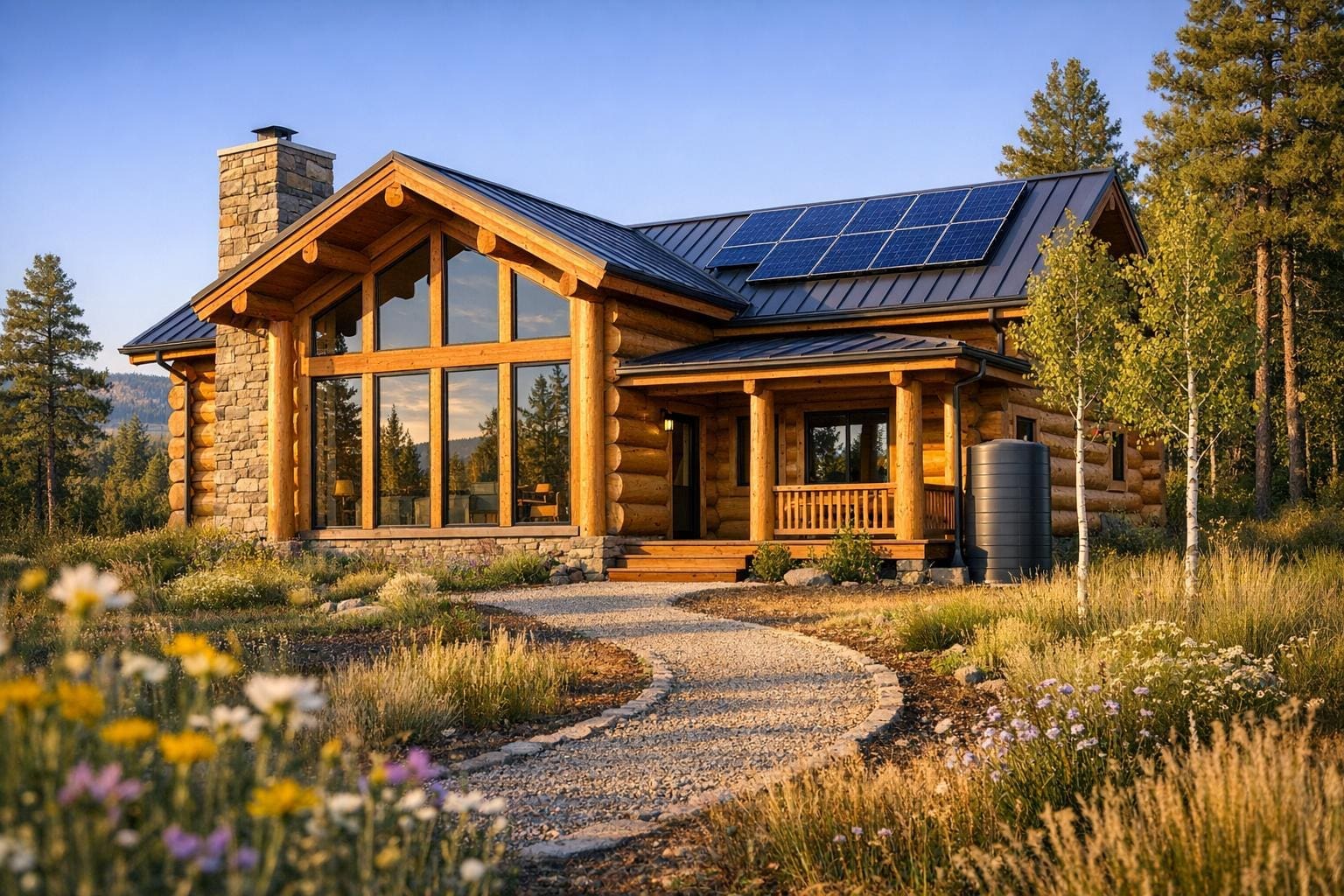
Building an eco-friendly log home is a smart choice for reducing your carbon footprint while enjoying long-term savings and comfort. Log homes use renewable timber, require fewer materials than conventional homes, and offer excellent natural insulation. With features like cedar logs, Structural Insulated Panels (SIPs), and passive solar design, these homes provide energy efficiency, lower utility costs, and better indoor air quality. Here’s a quick summary of what you need to know:
- Cedar Logs: Renewable, durable, and energy-efficient, with natural thermal mass for temperature stability.
- SIPs: High insulation (up to R-72), airtight construction, and reduced energy bills.
- Passive Solar Design: Optimizes sunlight for heating and cooling, reducing energy consumption.
- Recycled Materials: Reclaimed wood and low-VOC finishes for healthier indoor air.
- Maintenance Tips: Regular inspections, cleaning, and sealing keep your home efficient and long-lasting.
Whether you build it yourself or hire professionals, following these principles ensures your log home is functional, eco-conscious, and built to last.
Energy efficient log cabin construction workshop
If you’re inspired by these techniques, now is the perfect time to build and take advantage of current eco-friendly kit options.
sbb-itb-1086e16
Selecting Sustainable Materials for Your Log Home
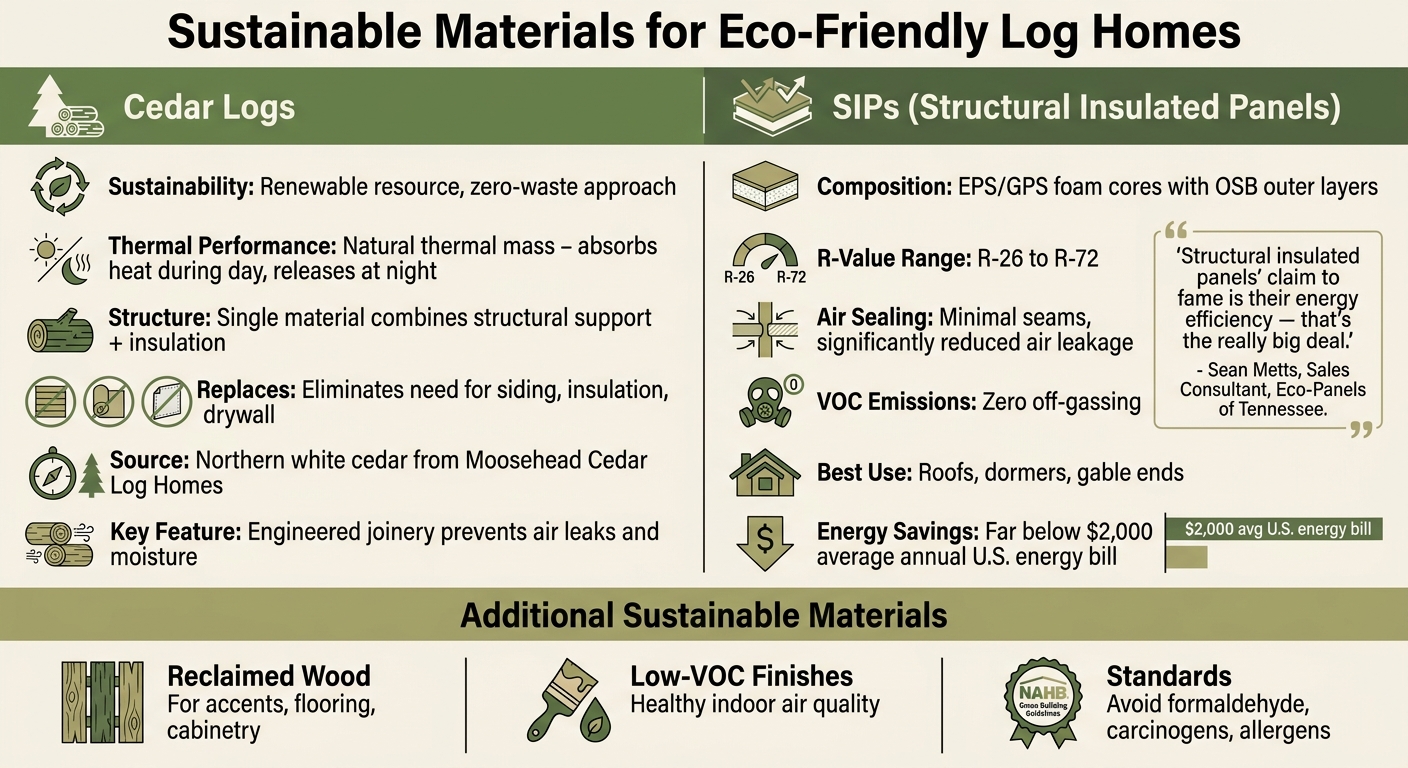
Eco-Friendly Log Home Materials Comparison: Cedar Logs vs SIPs Energy Efficiency
Choosing the right materials is the first step toward building an eco-friendly log home. The focus should be on renewable resources, energy efficiency, and responsible sourcing while ensuring the home remains durable and efficient. Every decision, from the type of logs to the insulation system, impacts both the environment and your home’s long-term costs. Thoughtful material choices not only reduce your ecological footprint but also improve your home’s energy efficiency. Below, we explore some key materials that combine environmental benefits with excellent performance.
Why Cedar Logs Are Ideal for Eco-Friendly Building
Cedar logs are a standout option for sustainable construction. As a renewable resource, cedar can be replanted and managed responsibly, ensuring its availability for future generations. Cedar logs also contribute to energy efficiency. Manufacturers typically make full use of each log, supporting a zero-waste approach.
Cedar’s thermal mass is one of its most valuable features. This property allows the wood to absorb heat during the day and release it at night, helping to maintain a stable indoor temperature without over-relying on heating or cooling systems [1]. Unlike conventional homes that require multiple layers – such as siding, insulation, and drywall – cedar log walls combine structural support and insulation in a single material [1]. At Big Twig Homes, we use northern white cedar logs sourced from Moosehead Cedar Log Homes (https://www.mclh.net/), ensuring consistent quality and responsible forestry practices. Additionally, engineered joinery systems are used to prevent air leaks and moisture problems, further improving the home’s thermal performance [1].
How Structural Insulated Panels (SIPs) Enhance Energy Efficiency
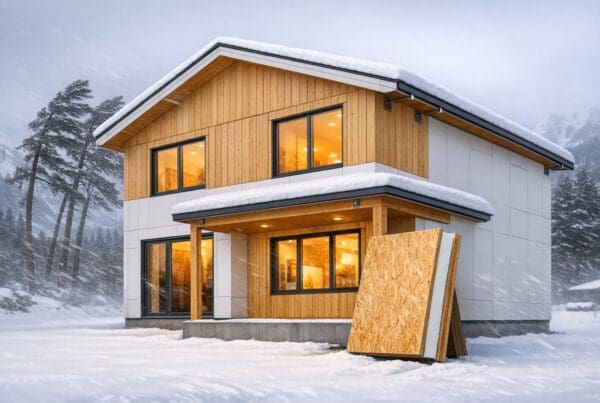
Structural Insulated Panels (SIPs) are an excellent addition to cedar logs, particularly for areas like roofs, dormers, and gable ends. At Big Twig Homes, we provide SIPs with EPS (expanded polystyrene) and GPS (graphite polystyrene) foam cores through our partnership with EPS Building Systems (https://epsbuildings.com/). These factory-fabricated panels have minimal seams, offering insulation values ranging from R-26 to R-72 and significantly reducing air leakage [2].
Structural insulated panels’ claim to fame is their energy efficiency – that’s the really big deal.
This insight from Sean Metts, Sales Consultant at Eco-Panels of Tennessee, highlights the primary advantage of SIPs [2]. The panels feature Oriented Strand Board (OSB) on the outer layers, a sustainable wood product, while the foam cores produce no VOC emissions or off-gassing [2]. Together, these elements create an airtight, energy-efficient envelope, helping homeowners save significantly on energy costs – far below the $2,000 average annual energy bill for American households [1]. SIPs also integrate seamlessly with other renewable and recycled materials in your home.
Using Recycled and Renewable Materials
Reclaimed wood is a fantastic option for accents, flooring, or cabinetry, adding unique character while keeping usable materials out of landfills. For finishes, look for options that meet low VOC standards to ensure healthy indoor air quality [1]. The National Association of Home Builders Green Building Guidelines emphasize the importance of using renewable resources and avoiding materials with formaldehyde, carcinogens, or allergens [1]. These principles should guide every material choice when designing your sustainable log home.
Designing for Energy Efficiency
Creating an energy-efficient home starts long before construction begins. Decisions about orientation, natural light, and renewable systems play a huge role in reducing energy consumption. One key aspect to consider is how passive solar design can optimize these efforts.
Passive Solar Design Basics
The orientation of your home is more important than many people realize. Ideally, windows and solar collection systems should face within 30 degrees of true south to take full advantage of winter sunlight [3]. This setup allows the low-angle winter sun to warm your home while roof overhangs block the high-angle summer sun. As the Department of Energy explains:
"A well-designed passive solar home first reduces heating and cooling loads through energy-efficiency strategies and then meets those reduced loads in whole or part with solar energy." [3]
Thermal mass is another important factor. Materials like log walls, stone flooring, or masonry fireplaces naturally absorb and release heat throughout the day. For example, heat moves through masonry at roughly one inch per hour, creating a delayed warming effect that keeps your home cozy after sunset [3]. Using darker colors on stone floors can enhance heat absorption. Pairing these elements with sustainable materials like cedar logs and structural insulated panels (SIPs) creates a cohesive, energy-conscious design. Solar collectors also need an unobstructed view of the sun between 9:00 a.m. and 3:00 p.m. during the heating season to work efficiently [3].
Preventing overheating is equally important. Roof overhangs should be designed to shade south-facing windows during the summer while still allowing winter sunlight to enter. Features like operable vents, electronic sensors, and awnings can help regulate indoor temperatures during transitional seasons. Additionally, avoid overusing south-facing glass, as it can cause uncomfortable temperature swings during spring and fall.
Adding Renewable Energy Systems
Efficiency comes first. Before installing renewable systems like solar panels, ensure your home is well-sealed and insulated. A properly optimized home envelope reduces energy demands, making renewable systems more effective. This natural temperature regulation means log home owners often spend far less than the average $2,000 annual energy bill for U.S. households [1].
Wood-burning stoves are another renewable option that aligns with the log home lifestyle. They provide a sustainable heat source, and open floor plans allow warmth to circulate freely, reducing the need for complex heating systems [1].
For the best results, plan renewable energy systems during the design phase. Modern log home floor plans and packages, such as those from Big Twig Homes, can include structural support for solar panels and other technologies. This integrated approach ensures energy efficiency without compromising the home’s design.
Improving Insulation and Air Sealing
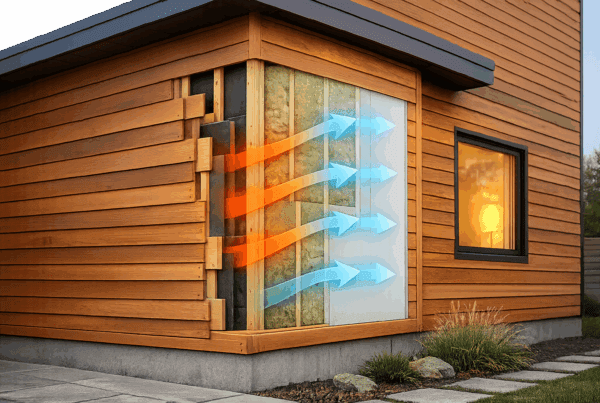
Cedar logs naturally provide insulation, but combining them with SIP panels can significantly boost overall performance. SIP panels from EPS Building Systems offer R-values ranging from R-26 to R-72, depending on their thickness [2]. In colder climates, it’s crucial to position at least two-thirds of your total R-value on the exterior side of the vapor control layer to prevent condensation and rot [5].
Air sealing should always come before insulation. Focus on eliminating leaks at joints, penetrations, and material transitions. Precision joinery in quality log homes helps minimize air infiltration at wall connections.
For additional insulation, natural materials like hemp batts (R-3.5 to R-3.7 per inch) or wood fiber (R-3.6 to R-4.2 per inch) are effective and allow moisture to escape [4]. Adaptive vapor control is another smart choice. While traditional vapor barriers go on the interior side of walls in colder climates, "smart" vapor retarders can manage moisture in both directions, especially in homes with air conditioning during humid summers [5].
Energy upgrades can also save you money. Homeowners can receive tax credits covering 30% of insulation and air sealing upgrade costs, up to $1,200 [4]. Upgrading to ENERGY STAR-rated low-e glass windows can further reduce annual energy bills by $110 to $400 [6]. These improvements not only lower costs over time but also reduce your environmental footprint.
Construction and Assembly Best Practices
Once you’ve chosen your materials and design, the next step is ensuring the construction process supports the sustainability goals of your home. Careful site preparation, efficient assembly methods, and adherence to regulations are all essential for achieving eco-conscious results.
Preparing Your Site with Minimal Disruption
Before breaking ground, it’s important to set up no-disturbance zones to protect existing trees, native plants, and the topsoil. This helps preserve the natural environment while reducing erosion and habitat destruction [1]. Modern log milling techniques also play a big role here, as they minimize waste by efficiently processing and repurposing materials [1]. Log walls, which serve as both the structure and insulation, simplify the materials needed for construction. Unlike conventional homes, you can skip separate siding, house wrap, plywood sheathing, dimensional lumber, fiberglass batts, and drywall [1]. This streamlined approach reduces material transport and waste on-site.
When it comes to finishes, opt for low-VOC stains and sealants to maintain better air quality inside and outside your home [1]. Following the NAHB Green Building Standard is a practical way to ensure your site development aligns with resource-efficient practices. These steps set the stage for an efficient assembly process while keeping environmental impact in check.
DIY Assembly vs. Hiring Professional Builders
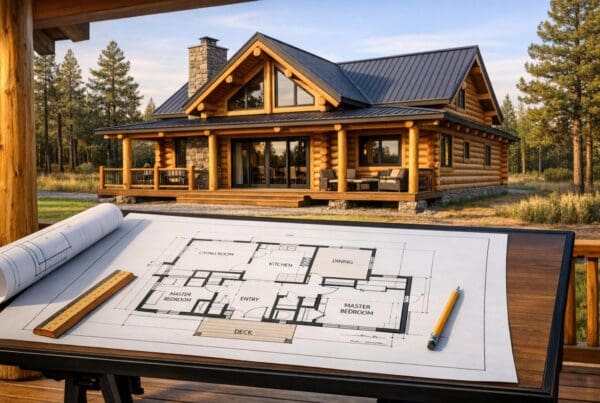
Log home kits are designed to simplify construction, but you’ll need to decide whether to tackle the project yourself or hire professionals. DIY assembly can save on labor costs and give you full control over the process. For example, Big Twig Homes provides cedar log home kits that include pre-cut logs, essential materials, and detailed blueprints to guide you through the build.
That said, professional builders bring valuable expertise. They specialize in engineered joinery techniques that create a tight thermal envelope, which is crucial for energy efficiency [1]. Their skills ensure proper sealing at log wall connections and roof systems, which helps maintain indoor comfort and lowers heating costs. Builders trained through organizations like the NAHB are also well-versed in green building standards, ensuring proper execution during construction.
Your choice will depend on your experience, time availability, and willingness to manage subcontractors for tasks like electrical work, plumbing, and foundation installation. If you prefer professional help, Big Twig Homes has a network of skilled builders across the Southeastern U.S. Regardless of the approach you choose, following local building codes is essential.
Meeting Local Building Codes and Regulations
Building code compliance is a critical step in ensuring your log home is both safe and efficient. The National Green Building Standard (ICC 700), developed by the International Code Council and the National Association of Home Builders, provides a recognized framework for resource-efficient construction [1][7]. This standard covers key areas such as site design, energy and water efficiency, indoor air quality, and global impact.
Energy codes often require homes to go beyond the minimum standards. For example, Energy Star certification demands a home perform 15% better than current codes, while the National Green Building Standard allows builders to aim for energy savings of up to 65% [7]. Many log home packages are designed to meet or exceed these benchmarks, especially when paired with features like double-paned low-e glass windows and proper ventilation systems.
To avoid surprises, work with your local building department early in the planning phase to understand area-specific requirements. Make sure your builder is familiar with green building standards and knows how to factor log wall thermal mass into energy calculations. Manufacturers that belong to the Log and Timber Homes Council rigorously test their components for safety, energy efficiency, and code compliance, which can help streamline the approval process [1].
Maintaining Your Eco-Friendly Log Home
Taking care of your eco-friendly log home ensures it stays energy-efficient and lasts for generations. Regular inspections and timely repairs are the best ways to prevent small issues from turning into big problems.
Protecting Cedar Logs from Weather and Wear
Cedar logs need a little extra attention to keep them in top shape. Inspect them twice a year – once in the spring and again in the fall – for signs of trouble like moisture spots, insect damage, or gaps in the sealant. Watch for dark patches, sawdust, or areas where the chinking has started to pull away.
Clean the logs annually using a wood-safe cleaner and a soft brush. This helps remove dirt and mildew without harming the wood. To check if it’s time to reapply stain, try the bead test: sprinkle water on the logs. If it soaks in instead of forming beads, it’s time to restain. As Timeless Woodcare Products points out:
A quality, pigmented stain offers the best defense against UV damage.
This is especially true for walls that face south or west, as they get the most sun exposure.
Sealant lines also need annual attention. Logs naturally expand and contract, so check for gaps and reapply caulking as needed. For larger gaps, use a backer rod before adding new caulking to ensure the seal is both flexible and durable. Keep landscaping trimmed back and gutters clear to avoid moisture problems around the logs.
| Maintenance Task | Frequency | Objective |
|---|---|---|
| Visual Inspection | Bi-annually (Spring/Fall) | Spot early signs of rot, insect activity, or sealant issues. |
| Log Washing | Annually | Remove dirt and mildew that can trap moisture and damage the wood finish. |
| Chinking/Caulking Check | Annually | Seal gaps to prevent leaks caused by natural log movement. |
| Gutter Maintenance | Regularly | Avoid water overflow that could saturate the logs. |
| Restaining | Based on wear | Maintain UV protection and water resistance. |
These steps not only protect your cedar logs but also help maintain your home’s energy-saving features.
Keeping Your Home Energy Efficient
The energy efficiency of your log home depends on maintaining its tight thermal envelope. This airtight seal, created during construction, keeps heating and cooling costs under control. Bi-annual inspections are key – look for gaps between logs or around windows and doors, as these can let air escape and drive up energy bills.
Moisture management is equally important. Wet wood loses its insulating ability and becomes prone to rot and mold. Make sure the ground slopes away from your foundation, gutters stay clear, and roof overhangs are in good condition. These measures help protect the upper logs from rain and snow buildup.
If your home includes renewable energy systems like solar panels, follow the manufacturer’s maintenance guidelines to keep them running smoothly. For homes with SIP panels, check the exterior sheathing for damage or moisture intrusion, as this could affect the insulation core. Just like log maintenance, keeping these systems in good shape is essential for preserving your home’s eco-friendly performance.
Eco-Friendly Cleaning and Repair Methods
Using environmentally friendly cleaning and repair methods helps maintain your home’s energy-efficient design while protecting the environment. Choose cleaning products made specifically for log homes. These cleaners effectively remove dirt and organic buildup without introducing harsh chemicals or leaving behind harmful residues.
For minor wood decay, borate-based treatments and low-VOC wood preservatives can stop rot and prevent infestations from pests like carpenter bees, termites, and powderpost beetles. Tackling these issues early can save you from more extensive repairs down the road.
When it’s time to refinish or repair, opt for low-VOC stains and sealants. These products are better for both indoor and outdoor air quality. As Timeless Woodcare Products explains:
A tight seal keeps your home cozy and your energy bills down.
And remember:
A proactive inspection helps you catch small problems before they become large, expensive repairs.
Conclusion: Building Your Eco-Friendly Log Home
This guide has walked you through sustainable materials and energy-efficient design strategies to help you create a durable, eco-conscious log home.
By choosing an eco-friendly log home, you’re not just reducing your environmental footprint – you’re gaining lasting comfort and lower energy costs. Incorporating sustainable cedar logs and high-performance SIP panels, alongside passive solar design and renewable energy systems, can significantly cut carbon emissions and utility expenses. For instance, cedar logs offer excellent natural insulation, while SIP panel homes can reduce heating and cooling costs by up to 60% [8].
The advantages go well beyond energy efficiency. Cedar’s natural resistance to moisture, pests, and decay ensures your home can endure for 50 to 100 years with proper care [8]. Plus, you’ll enjoy better indoor air quality and less construction waste. On top of that, your home will actively store CO2, contributing to a healthier planet. From lower energy bills to enhanced air quality, every sustainable decision you make adds value to your home and the environment.
Big Twig Homes simplifies the process with customizable packages and floor plans designed to meet your specific needs. Whether you prefer the rustic charm of a cedar log home or the modern efficiency of SIP panels, their team offers expert guidance backed by over 30 years of experience. As they proudly state:
Our underlying meticulous approach to all our customers’ projects is the common thread.
Now’s the time to take the next step. Ready to build your eco-friendly log home? Reach out to Big Twig Homes at 833-BIG-TWIG (833-244-8944) or email info@bigtwighomes.com for a free estimate. With delivery options across the Southeastern United States and beyond, you’ll have everything you need to create a home that’s both sustainable and comfortable.
FAQs
How do I choose the best log and SIP options for my climate?
To find the right log and SIP materials for your climate, focus on options that improve energy efficiency and withstand local environmental conditions. Cedar logs work well in humid areas because they naturally resist moisture and decay. For SIP panels, EPS foam is a solid choice, offering strong insulation across different climates. In colder regions, go for panels with higher R-values, while standard panels are sufficient for milder weather. It’s always a good idea to check with suppliers for advice tailored to your specific climate needs.
What’s the simplest passive-solar layout for a log home?
When designing a log home with passive solar principles, the goal is to make the most of natural sunlight for heating and lighting. Start by positioning the house to face south, ensuring it gets plenty of sunlight throughout the day. Add larger windows on the south-facing side to let in warmth and light, while keeping windows on the north side smaller to minimize heat loss. To keep things comfortable in the summer, use overhangs or shading devices to block excessive heat. For the best results, work with a design professional who can tailor the layout to fit your specific site and climate conditions.
What maintenance matters most to keep logs sealed and efficient?
To keep your logs tightly sealed and in good shape, pay attention to chinking, sealants, and wood preservatives. Make it a habit to inspect and reseal chinking and sealants regularly. This helps block drafts and moisture, keeping your insulation effective and preventing damage. Applying wood preservatives is another essential step – they protect your logs from rot, insects, and the effects of weather, helping them last longer. Consistent maintenance is the secret to ensuring your log home remains efficient and stands the test of time.