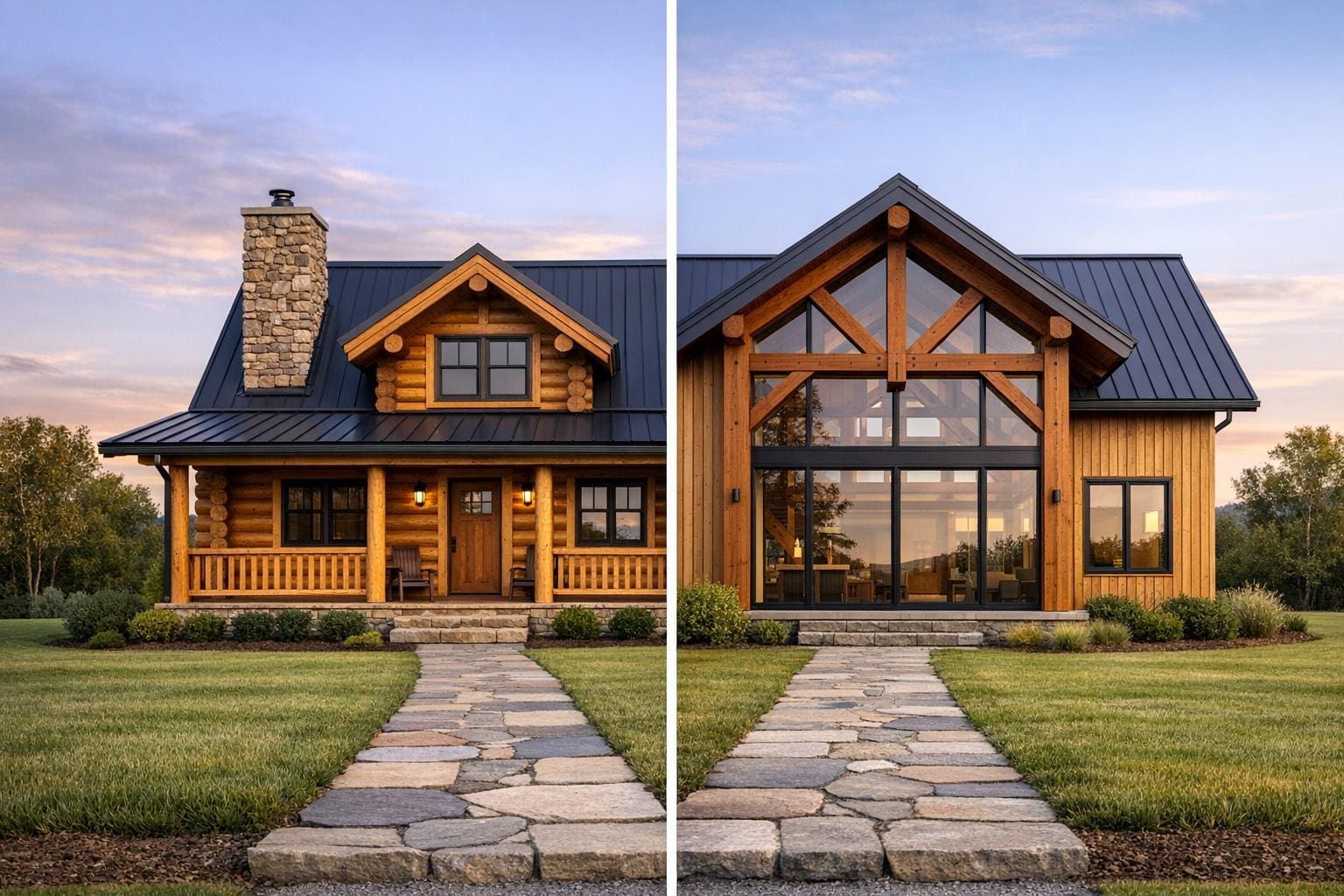
When deciding between a log home and a timber frame home, the choice depends on your preferences, budget, and maintenance expectations. Here’s a quick breakdown:
- Log Homes: Built with horizontal logs that act as both structure and exterior. Offers a rustic look but requires regular maintenance like staining and chinking, with costs and durability varying between cedar and pine log homes. Insulation can be challenging without additional measures.
- Timber Frame Homes: Constructed with a post-and-beam framework, allowing flexible wall materials (e.g., siding, brick). Easier to maintain, better insulation options, and supports open floor plans.
Quick Comparison
| Feature | Log Homes | Timber Frame Homes |
|---|---|---|
| Construction | Stacked horizontal logs | Post-and-beam framework |
| Exterior Options | Logs only | Variety (siding, brick, etc.) |
| Maintenance | Regular staining & chinking | Minimal exterior upkeep |
| Insulation | Lower R-value, extra needed | High-performance options |
| Design Flexibility | Limited by log structure | Open layouts, flexible walls |
| Cost (per sq. ft.) | ~$120-$200 turnkey | Comparable to luxury builds |
Both styles are durable and showcase natural wood, but timber frames generally offer more design freedom and lower upkeep, while log homes provide a classic, rustic aesthetic. Choose based on your lifestyle and priorities. If you’re ready to move forward, now is the perfect time to build a log home to take advantage of current planning cycles.
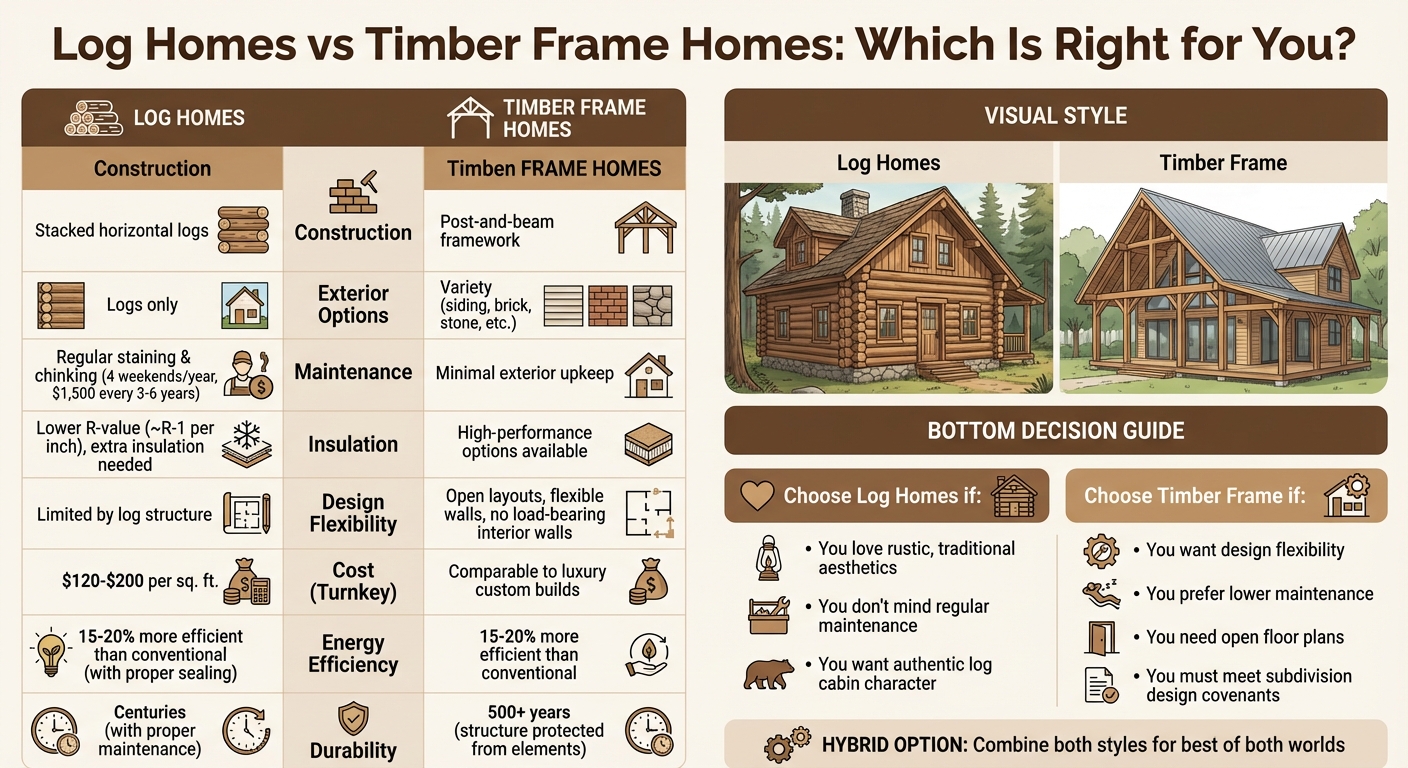
Log Homes vs Timber Frame Homes: Complete Comparison Guide
Log Homes vs. Timber Frame Homes
sbb-itb-1086e16
How Log Homes and Timber Frame Homes Differ Structurally
The way log homes and timber frame homes are built creates distinct differences in their appearance, functionality, and even long-term performance. Let’s break down the structural details of each.
Log Homes: Logs That Are Both Structure and Walls
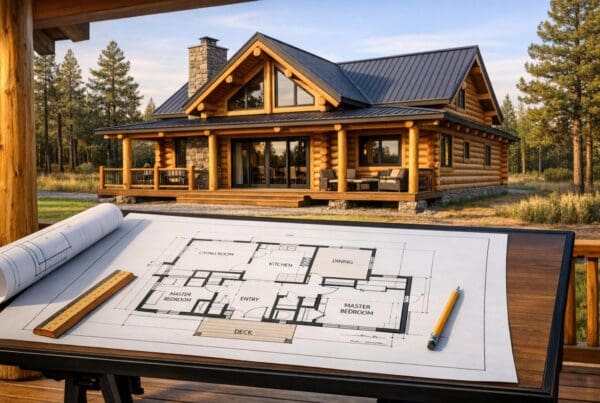
In log homes, the walls do double duty – they’re both the structural framework and the finished surface. This is achieved by stacking logs horizontally, which transfers the weight of the home down to the foundation.
"Full-log homes are made by stacking logs horizontally to form solid walls." – Log Home Living Editors [1]
When building a log home, you’ll typically choose between milled logs, which are uniform in size for a more polished look, and handcrafted logs, which keep their natural, uneven shapes for a rustic vibe. The logs interlock at the corners using specialized joinery, ensuring the structure stays firmly in place. Since the walls are solid logs, any electrical wiring or plumbing has to be carefully planned and integrated during construction.
Timber Frame: A Structural Skeleton with Flexible Wall Options
Timber frame homes rely on a post-and-beam framework made up of vertical posts and horizontal beams to support the structure. This framework is held together using traditional mortise-and-tenon joinery, secured with wooden pegs – no metal fasteners required.
Unlike log homes, the walls in a timber frame home are not structural. Instead, they’re treated as "infill", meaning you can use a variety of materials like siding, brick, stone, or insulated panels to finish them. This separation between the frame and walls not only strengthens the structure but also gives you more design freedom.
"The frame’s interlocking configuration eliminates the need for load-bearing interior walls, creating the wide-open living spaces today’s homeowners seek." – Log Home Living Editors [1]
This flexibility allows for features like cathedral ceilings and open floor plans without the need for internal support walls. Inside, the exposed timber frame showcases the craftsmanship, while the exterior can be styled to blend with conventional homes – perfect for neighborhoods with specific aesthetic requirements.
Cost Comparison: What Affects the Price of Each Home Type
To understand the price differences between log homes and timber frame homes, you need to consider more than just the initial package cost. Both involve distinct material and labor expenses that influence the total price.
Log Home Costs: Materials and Labor
Logs are a significant part of the material costs for log homes. For example, a single truckload of logs costs about $800, and a cabin measuring 20×28 ft. typically requires two to three truckloads [3]. If you’re opting for a pre-packaged solution, a log home kit for a 560-square-foot cabin costs around $16,000 [3]. However, this price only includes the logs and basic materials – it doesn’t cover assembly or finishing work.
Labor costs for log homes tend to be higher than those for conventional construction due to the specialized skills needed. Tasks like stacking, sealing, and managing the natural settling of the wood require expertise. Additionally, you’ll need to account for chinking (sealing gaps between logs) and settling hardware to accommodate the natural expansion and contraction of the wood. Justice Kelly, a log home builder, explains:
"Figure 4 weekends a year on upkeep, and a 1500 bill every 3-6 years for stain and caulking/chinking" [3].
Another factor to consider is insulation. Wood has a low R-value (approximately R-1 per inch), meaning it doesn’t insulate well on its own. In colder climates, additional interior insulation may be necessary to meet standards like R-24 or higher. Builder Troy Rhodes highlights:
"The only way you get [R-24 or higher] with a log house is to build basically another wall inside the log wall and insulate that. Expensive and you lose many of the advantages of a log house" [3].
Timber Frame Costs: Framework and Wall Infill
Timber frame homes have their own set of costs, largely driven by their post-and-beam design. The framework relies on precision joinery, such as mortise-and-tenon connections secured with wooden pegs, which requires expert craftsmanship. While the framework forms the structural skeleton, you’ll need to allocate a separate budget for wall infill systems to complete the structure.
Price Range Comparison Table
Costs vary depending on design, location, and construction methods. Here’s a quick look at typical price ranges for different home types:
| Home Type | Materials/Package Only (per sq. ft.) | Turnkey/Complete (per sq. ft.) |
|---|---|---|
| Log Home | ~$28 – $30 [3] | $120 – $200 [3] |
| Timber Frame | Varies by design | Comparable to luxury custom builds [3] |
| Traditional Stick Frame | Not specified | $80 – $200 [3] |
Justice Kelly adds:
"Our rule of thumb to ‘ballpark’ a price is $120-200 for log, and 80-200 for stick frame in per square foot prices for turn key operations" [3].
Keep in mind that factors like shipping distance, design complexity, and site location can significantly influence these figures. For example, building in a remote area can increase transportation costs for heavy logs or timber frames. Similarly, custom design features will add to both material and labor expenses. Always confirm whether quoted prices include delivery, assembly, and finishing or just the basic materials.
Energy Efficiency: How Each Home Type Performs
Energy efficiency is all about managing heat transfer and keeping indoor spaces comfortable. Both log homes and timber frame homes tackle this challenge differently, using their unique designs and materials to achieve energy savings.
Log Homes: Thermal Mass and Indoor Temperature Stability
Log homes take advantage of wood’s natural thermal mass, which allows them to absorb, store, and slowly release heat. This helps maintain more stable indoor temperatures. However, while thermal mass plays a role, it doesn’t automatically translate to high energy efficiency. Solid logs have an R-value of roughly R-1 per inch, which isn’t particularly insulating. To make log homes energy-efficient, meticulous sealing is crucial – especially at foundations, log joints, and roof connections – to prevent air leaks and maintain consistent performance [2].
Mike Gingras, Owner of Seven North Log Homes, highlights the energy potential of modern log construction:
"Today we can build a log and timber home to be 15 to 20 percent more energy efficient than a conventional home" [2].
When built to meet Energy Star standards, log homes can even achieve up to 30% better energy efficiency compared to homes built to basic code requirements [2].
Timber frame homes, on the other hand, take a different approach to energy performance.
Timber Frame: Advanced Insulation Systems for Maximum Efficiency
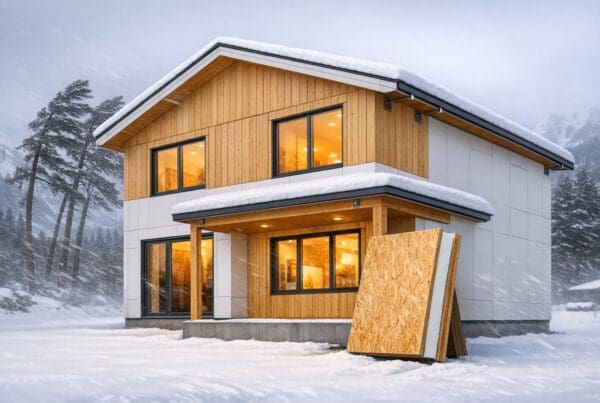
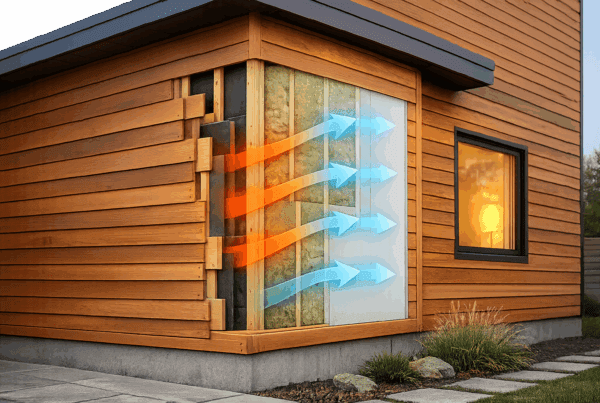
Timber frame homes excel in energy efficiency thanks to their structural design. Unlike log homes, timber frames use a post-and-beam system that separates the load-bearing structure from the exterior walls. This setup allows for the integration of advanced insulation materials with much higher R-values than solid wood can provide. For instance, pairing timber frames with structural insulated panels (SIPs) creates an airtight envelope that drastically cuts down on heating and cooling demands.
These homes are well-suited to meet rigorous energy standards, offering a 15% to 20% efficiency improvement over conventional homes [2]. This boost comes largely from the flexibility to incorporate high-performance insulation rather than relying on thermal mass. Timber frame designs allow homeowners to tailor wall systems to suit their specific climate and energy needs, making them a versatile option for energy-conscious construction [4].
Maintenance Requirements and Durability
When it comes to homes, energy efficiency is just one piece of the puzzle. Long-term durability and regular upkeep play a big role in maintaining comfort and value over the years. Knowing what kind of maintenance is involved can help you weigh the initial costs against the ongoing care these homes require.
Both log and timber frame homes are built to last – some can even endure for centuries [2]. But the maintenance demands for each type vary significantly.
Log Home Maintenance: Staining, Chinking, and Settling
Log homes need consistent care because their structural logs are directly exposed to the elements. Sunlight, moisture, and UV rays can take a toll, so applying exterior stains or oils is essential. How often this needs to be done depends on your local weather and the type of wood used. For example, Northern White Cedar naturally resists moisture and insects better than pine, which may reduce the frequency of treatments [5].
Chinking, the material used to seal gaps between logs, also requires regular attention. As the logs settle and dry, gaps can form, and caulking may crack. This means you’ll likely need to make periodic adjustments around windows, doors, and other fixed parts of the home. Features like large roof overhangs can help protect the logs from moisture, which is the main culprit behind rot [6].
To keep insects at bay, treating log joints with a borax solution every so often is a smart move [6]. One benefit of log construction is that issues like rot are usually easy to spot during routine inspections, making it easier to fix problems early [2].
On the other hand, timber frame homes are designed to minimize the need for frequent maintenance.
Timber Frame Maintenance: Reduced Upkeep with Varied Exteriors
Timber frame homes generally require less hands-on care because their structural timbers are shielded by an exterior envelope, often made of SIPs (structural insulated panels) or siding. This protective layer is key to their durability:
"Traditional timber frames are 500 year old because the structure is separate from the insulation" [6].
By keeping the frame separate from insulation and weather exposure, timber frames are less vulnerable to moisture, UV rays, and other environmental factors.
Most of the maintenance for timber frame homes focuses on the exterior materials. For instance, wood siding might need periodic staining, while brick or stone exteriors demand very little upkeep. Plus, the post-and-beam design of timber frames means there’s minimal movement in the structure, reducing the need for adjustments or repairs like those required for log homes. This construction method offers long-lasting durability with far less day-to-day care needed.
Design Options and Visual Appeal
When it comes to defining a home’s character, how it looks is just as important as how it’s built or how well it performs.
Log Homes: Timeless Rustic Charm
Log homes are instantly recognizable for their iconic stacked horizontal logs, which serve as both the structure and the finished exterior. As the editors of Log Home Living put it:
"Any time a company wants to convey a feeling of history, quality or comfort, a log home fits the bill." [1]
These homes exude a sense of tradition and craftsmanship. You can choose between the uniformity of milled logs or the natural, varied look of handcrafted logs. Even the shape of the logs – whether round or square – and the style of the corner joints offer ways to personalize both the appearance and structural integrity of the home.
While log homes lean into their rustic heritage, timber frame homes offer a more modern aesthetic alongside their structural appeal.
Timber Frame Homes: Versatile and Stylish
Timber frame homes are all about flexibility and design freedom. Thanks to their post-and-beam construction, the structural framework carries the load, allowing you to choose from a range of exterior finishes like siding, stone, or brick – or even mix and match. This makes it easy to either blend in with the surrounding neighborhood or stand out with a bold, modern design.
Timber frame homes also create a seamless connection between exterior and interior design:
"Timber home exteriors hint at the elaborate woodwork within. This allows them to easily fit in with nearby homes and subdivisions that enforce design covenants." [1]
On the inside, the craftsmanship shines through. Intricate mortise-and-tenon joinery, secured with wooden pegs, adds both strength and beauty. Decorative details like chamfering, pendants, and unique truss designs further enhance the architectural style. Plus, the absence of interior load-bearing walls means you can enjoy spacious, open floor plans and large windows that bring in plenty of natural light. It’s a perfect blend of rustic warmth and modern elegance.
These distinct design elements make it easier to choose the home style that best reflects your personal taste and lifestyle.
How to Choose Between Log Homes and Timber Frame Homes
Deciding between a log home and a timber frame home depends on your personal style, budget, maintenance expectations, and the specifics of your building site.
What to Consider When Deciding
Beyond construction and maintenance differences, there are a few other factors to weigh when making your decision.
First, check local design covenants. Many subdivisions enforce strict aesthetic rules. Timber frame homes offer flexibility with exterior finishes like stone, brick, or siding, which might align better with these guidelines. On the other hand, the distinct look of log homes may not always comply with such restrictions.
Maintenance is another key point. Log homes require regular treatments to preserve their appearance and integrity, while timber frame homes often feature lower-maintenance exterior options. Your desired floor plan also plays a role. Timber frames use a post-and-beam system, allowing for open, expansive spaces without interior load-bearing walls. In contrast, the stacked log walls of traditional log homes can influence room layouts and limit flexibility [1].
Both styles are incredibly durable. Structures built from logs or timber have stood the test of time, with examples in Europe lasting over 800 years. One log church in Russia is even believed to be more than 1,700 years old [2]. As Log Home Living editors put it:
"Owning a log or timber-framed house is more than a roof over your head; it’s the embodiment of a lifestyle" [1].
If you’re torn between the two, blending both styles can offer a tailored solution.
Combining Log and Timber Frame Elements
Why choose just one? Hybrid designs allow you to enjoy the best of both worlds. For instance, you could use timber framing to create a dramatic great room with soaring cathedral ceilings and add log construction in other sections to bring in a cozy, rustic feel. This approach combines the versatility of timber frames with the charm of logs, catering to a variety of design preferences and site needs [1].
Conclusion
Deciding between a log home and a timber frame home ultimately comes down to your personal preferences and priorities. Log homes exude rustic charm with their signature stacked-log construction, while timber frame homes provide greater design flexibility, thanks to their post-and-beam framework that supports a variety of exterior styles and open, spacious interiors. Both options offer durability, energy efficiency, and the timeless appeal of natural wood.
When making your decision, think about factors like maintenance, design goals, and local building codes. Log homes require regular upkeep to maintain their appearance and structural integrity, whereas timber frames generally demand less maintenance. If you value open layouts without load-bearing interior walls, a timber frame might be your best bet. However, if the authentic character of exposed logs speaks to you, a log home could be the perfect fit. These differences are key to finding the right choice for your lifestyle.
At Big Twig Homes, we specialize in crafting high-quality cedar log home kits and building solutions tailored to your vision. Founded by Aaron and Meredith Dunn, we focus on providing top-notch materials, clear guidance, and personalized support every step of the way. Our precut, pre-drilled log systems allow for quick assembly, making your home shell weather-tight in as little as two weeks, which helps protect your build from weather-related issues during construction [2].
Whether you’re building a family home, a peaceful retreat, or a vacation rental, we understand this is a significant investment. That’s why we take the time to learn about your needs, budget, and goals to ensure you make the best decision. From rustic cedar log packages to modern construction solutions, we deliver products that blend craftsmanship, efficiency, and long-term value.
Interested in learning more? Reach out to Big Twig Homes today for expert advice and start creating a home that perfectly suits your lifestyle and stands the test of time.
FAQs
How do I choose between a log home and a timber frame for my climate?
Log homes offer impressive insulation thanks to the thermal mass of the logs, which helps maintain warmth during cold winters. This makes them a solid choice for areas with harsh winter climates. On the other hand, timber frame homes, though quicker to build, rely on added insulation to match the energy efficiency of log homes in colder conditions. If you’re in a region with severe winters, a log home’s natural insulating properties may require less effort to keep cozy, while a timber frame home might demand more work to achieve the same level of warmth.
What ongoing maintenance should I expect with a cedar log home?
Maintaining a cedar log home means staying on top of a few key tasks to keep it looking great and standing strong. Regularly inspect for any signs of moisture issues or damage, as water can be a big enemy to wood. Make sure to clean the surface to keep mold and mildew at bay, which not only protects the wood but also keeps it looking fresh. Lastly, applying protective finishes or sealants as needed helps shield the wood and maintain its natural beauty over the years. These steps go a long way in preserving the charm and durability of your cedar log home.
Can I combine log walls and timber framing in one home design?
Absolutely! Combining log walls and timber framing in a single home design creates what’s often referred to as a hybrid home. This design approach gives you the freedom to mix and match materials like round logs, square timbers, stone, or cedar, offering endless possibilities for a personalized look. By blending the cozy, rustic feel of log walls with the striking structural and visual appeal of timber framing, hybrid homes deliver a one-of-a-kind design tailored to your style.