
Structural Insulated Panels (SIPs) are a modern building solution that combines framing, insulation, and air sealing into a single product. They improve energy efficiency, reduce construction time, and provide strong structural performance. Here’s what you need to know to select the right SIP system:
- Energy Efficiency: SIPs eliminate thermal bridging and offer consistent insulation. For colder climates, thicker panels or GPS cores provide higher R-values.
- Structural Strength: SIPs handle loads effectively and withstand extreme weather, including high winds and seismic activity.
- Cost: While upfront costs are higher ($7–$12 per sq. ft.), savings come from reduced labor, faster installation, and lower energy bills.
- Customization: SIPs can integrate with various designs, including cedar log homes, and come pre-cut with electrical chases for easier installation.
- Durability: Proper sealing and moisture management extend their lifespan to over 50 years.
When choosing SIPs, assess your climate, budget, and design needs. Verify manufacturer certifications and work with experienced builders for the best results. SIPs offer a long-term investment in comfort, energy savings, and durability.
SIP Framing | What You Need To Know Before You Build…
sbb-itb-1086e16
What Are SIP Panels?
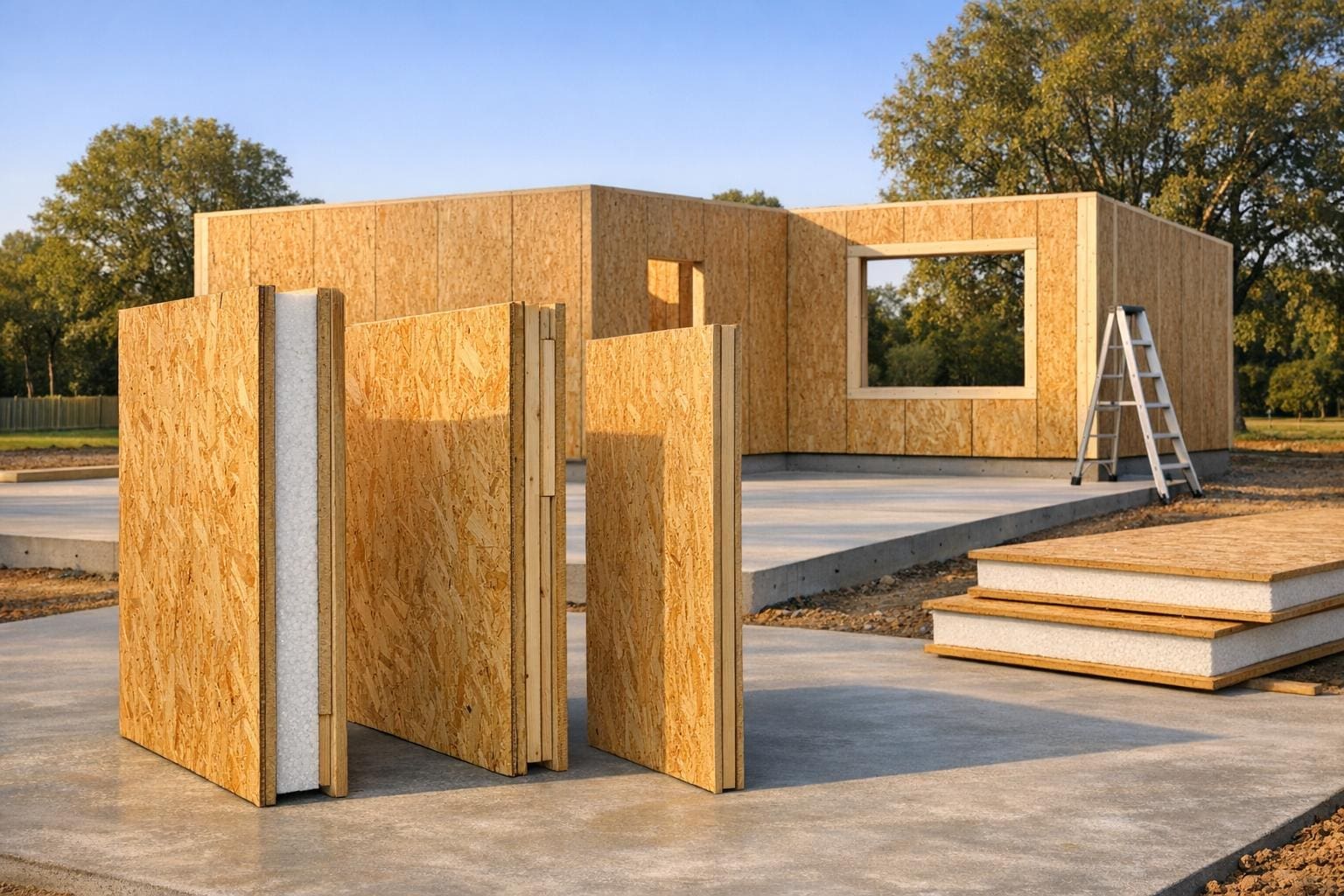
Structural Insulated Panels (SIPs) are high-performance building materials designed like a sandwich: two durable outer layers encase a thick, insulating core in the middle [5]. Unlike traditional construction, where framing, insulation, and sheathing are installed separately, SIPs combine all these elements into one pre-made unit. Think of them like a steel I-beam – while the outer layers handle tensile forces, the foam core manages compressive and shear forces [5]. This design creates a strong, energy-efficient building envelope that’s perfect for exterior walls, roofs, floors, and even foundations in both residential and light commercial projects [5].
How SIP Panels Are Built and Work
Most SIPs feature oriented strand board (OSB) as the outer layers and expanded polystyrene (EPS) foam as the core [5]. However, manufacturers also offer other options, such as plywood, fiber cement, magnesium oxide board, or sheet metal for the facings, and extruded polystyrene (XPS), polyisocyanurate, or polyurethane for the core [5].
Here’s what you can expect:
- Weight: Standard panels weigh about 15–20 kg/m² (roughly 3–4 pounds per square foot).
- Cost: In the U.S., prices range from $4 to $6 per square foot [5].
- Insulation: A 4.5-inch panel with 3.5 inches of EPS foam delivers an R-value of about 13.8 [5].
SIPs excel in thermal performance thanks to their continuous insulation layer, which eliminates wood studs and "cold bridges" that can reduce efficiency. They also arrive pre-cut, complete with built-in electrical chases, making installation quick and straightforward. This streamlined process translates to savings in both time and labor.
Main Benefits of SIP Panels
SIPs go beyond just providing insulation. A study by BASF revealed that SIP panels can cut jobsite labor needs by 55% compared to traditional methods [4]. Additionally, the precision of factory-cut panels reduces construction waste by up to 60% [6].
"SIP panels deliver unrivaled insulation and airtightness, which reduces energy costs over the building’s lifetime."
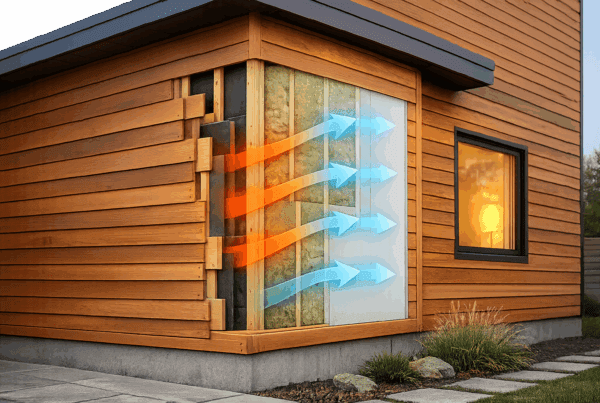
Their airtight construction minimizes the entry of moisture-laden air, which helps prevent condensation issues like mold, mildew, and rot [4]. This controlled environment supports better indoor air quality by enabling filtered ventilation systems that reduce allergens and maintain consistent comfort.
Although SIPs may have an upfront material cost that’s 5% to 10% higher [6], the long-term savings are significant. Over its lifetime, a SIP-constructed building can cost up to 40% less than a conventionally framed home [5]. These performance advantages make SIPs a standout choice when evaluating building materials for your project.
What to Consider When Choosing a SIP Panel System
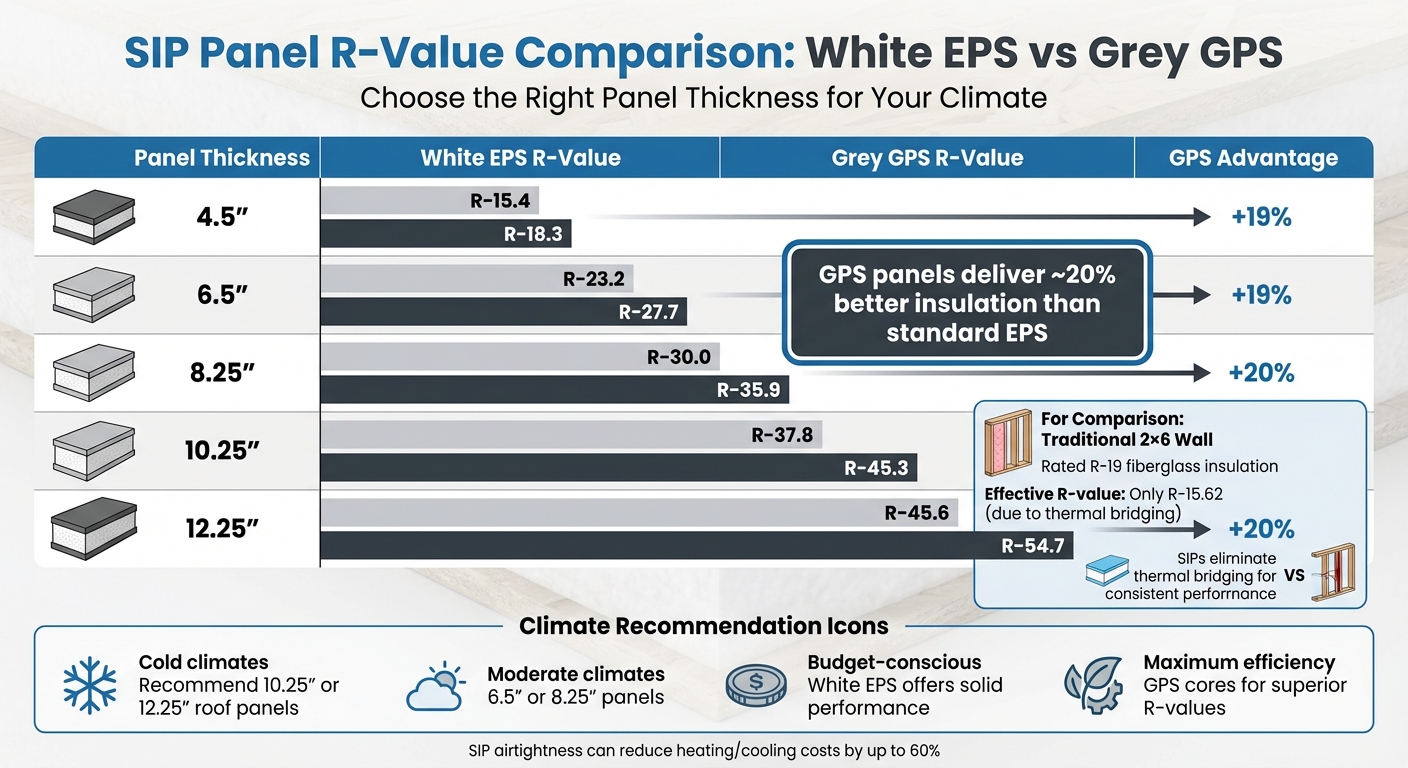
SIP Panel R-Values: White EPS vs Grey GPS Comparison by Thickness
Picking the right SIP system involves aligning the panels with your home’s specific needs. The key factors to weigh are insulation performance, structural strength, and cost. Together, these elements influence how your home functions, how durable it will be, and how much you’ll spend upfront and over time.
Insulation Performance: R-Values and Panel Thickness
When considering insulation, look at whole-wall performance, not just the foam core’s R-value. Unlike traditional stick-framed walls, which lose insulation efficiency due to thermal bridging at studs, SIPs provide consistent insulation. For example, a 6.5-inch SIP panel offers a steady R-value of 23.2, while a 2×6 wall with R-19 fiberglass insulation drops to an effective R-value of 15.62 because of interruptions caused by wood framing [8].
Panel thickness plays a big role in energy efficiency. Common sizes include 4.5-inch, 6.5-inch, 8.25-inch, 10.25-inch, and 12.25-inch panels. In colder regions, thicker roof panels – like 10.25-inch or 12.25-inch – help minimize heat loss where it’s most critical. For those looking to boost R-values without increasing wall thickness, graphite polystyrene (GPS) panels are a smart choice, delivering around 20% better insulation than standard EPS. For instance, a 6.5-inch GPS panel achieves an R-value of 27.7 compared to 23.2 for white EPS of the same size [8].
| Panel Thickness | White EPS R-Value | Grey GPS R-Value |
|---|---|---|
| 4.5" | 15.4 | 18.3 |
| 6.5" | 23.2 | 27.7 |
| 8.25" | 30.0 | 35.9 |
| 10.25" | 37.8 | 45.3 |
| 12.25" | 45.6 | 54.7 |
SIPs also excel in airtightness, which significantly impacts energy use. They can achieve air infiltration rates below the 3 ACH50 threshold required for ENERGY STAR certification, cutting heating and cooling costs by up to 60% [8]. This airtight design not only lowers energy bills but also reduces the size – and cost – of your HVAC system.
Structural Strength and Lifespan
SIPs aren’t just about insulation; their structural integrity is just as important. These panels distribute loads effectively, with OSB facings handling tension and compression while the foam core resists shear and prevents buckling [10][3]. Thanks to this design, SIPs can support axial loads in walls, transverse loads in roofs and floors, and racking loads during high winds. They’re even approved for high-wind areas, withstanding speeds over 180 mph and meeting High Velocity Hurricane Zone (HVHZ) standards [10].
Longevity depends on proper moisture management. Ensuring joints are well-sealed is critical to avoiding water damage and extending the lifespan beyond 50 years. During installation, check for “overflow seeping” of spray foam at joints, which confirms a deep, protective seal [3]. Big Twig Homes manufacturers support this durability with a 25-year materials warranty.
For peace of mind, make sure your SIP system complies with the International Building Code (IBC) or International Residential Code (IRC) and has passed ASTM E72 structural tests [9]. In termite-prone areas, consider panels with borate-treated foam or OSB, and use steel mesh at the foundation connection [10]. Additionally, apply a 15-minute fire-resistant barrier, such as ½-inch gypsum board, to meet fire safety codes [10].
Cost and Budget Planning
By 2026, the average national cost for SIP panels is expected to be around $9.70 per sq. ft., with typical prices ranging from $7 to $12 per sq. ft. [11]. While SIPs may have higher upfront costs, their 55% faster installation and 40%–60% energy savings can significantly reduce long-term expenses [11][12]. Downsizing HVAC systems further offsets initial costs, and the superior airtightness of SIPs minimizes energy waste, meeting ENERGY STAR standards [9].
When comparing quotes, calculate costs based on the square footage of exterior walls and roof panels, not the total building square footage. Ensure estimates include essentials like splines, fasteners, and tape. Since electrical chases are pre-cut at the factory, finalize your electrical and plumbing layouts early to avoid costly modifications later. Bulk purchasing for the entire structure is also more economical than ordering in stages.
| Home Size (Sq. Ft.) | Wall Panels (Avg. Cost) | Roof Panels (Avg. Cost) | Total Material Cost |
|---|---|---|---|
| 1,800 | $12,600 – $21,600 | $14,870 | $27,470 – $36,470 |
| 2,000 | $14,000 – $24,000 | $16,500 | $30,500 – $40,500 |
| 2,200 | $15,400 – $26,000 | $18,170 | $33,570 – $44,170 |
While thicker panels may cost more upfront, they often pay off in colder climates through reduced heating bills over time. SIP homes also deliver better structural performance and energy efficiency, which can enhance property value and reduce maintenance costs for builders. Prices can vary due to design and shipping costs.
Using SIP Panels with Cedar Log Home Designs
SIP panels work seamlessly with cedar log homes through a hybrid construction method. This approach combines the rustic charm of a cedar log exterior with the energy efficiency of SIP-based interiors. The result? A home that balances traditional aesthetics with modern performance, aligning with the energy goals discussed earlier.
Customizing SIP Panels for Cedar Log Homes
Big Twig Homes specializes in creating SIP packages tailored to cedar log home designs. Whether you’re building a cozy cabin, a luxury retreat, or an accessory dwelling unit, pre-cut SIP panels are customized to match your floor plan. These panels integrate smoothly with cedar log elements and come with built-in electrical chases, which require early layout planning. This method ensures a high-performance thermal envelope – something traditional log homes often struggle to achieve. The SIP panels can function as interior walls, roof systems, or enclosures for timber frames, while the cedar logs maintain the classic exterior look.
"Hybrid log homes have a cedar log exterior and a conventional interior, which allows for more flexibility and customization." – Big Twig Homes [13]
The cost of this hybrid construction ranges from $150 to $350+ per square foot [13]. This makes it a more budget-friendly option compared to full log construction, while still delivering superior energy efficiency. Pricing varies drastically from one location to another in the southeast; design is also a major factor to keep in mind if you are looking to control pricing.
Pairing SIP panels with Northern White Cedar takes this integration to the next level, enhancing both functionality and natural beauty.
Combining SIP Panels with Natural Wood Materials
Using SIPs alongside Northern White Cedar creates a durable and high-performing home. Cedar’s natural resistance to moisture and insects complements the airtight and thermally efficient properties of SIPs. For the exterior, many builders opt for Tongue & Groove (T&G) D-Log siding over the SIP structure. This design not only mimics the look of traditional logs but also features interlocking joints that help keep moisture out [14].
To maintain durability, it’s important to use high-quality, low-VOC exterior stains and regularly inspect the seals where wood siding meets the SIP panels – especially around windows and doors. Inside, finishing SIP walls and ceilings with natural wood tongue and groove paneling creates a cohesive, rustic feel throughout the home [14].
Since SIP structures are exceptionally airtight – often achieving air leakage rates below 3.0 ACH50 – a mechanical ventilation system is crucial. This system helps regulate indoor air quality and manages humidity levels [10].
How to Select the Right SIP Panel System
Choosing the right SIP system involves balancing your home’s specific needs with energy efficiency, comfort, and durability over time.
Evaluate Your Home’s Requirements and Goals
Start by assessing your climate and insulation needs. For colder regions, Graphite Polystyrene (GPS/Neopor) cores are a smart choice, offering 20–25% higher R-values compared to standard EPS. If budget is a concern, Expanded Polystyrene (EPS) provides solid insulation at R-3.6 per inch.
Since SIP structures and commercial buildings are highly airtight, your HVAC system will likely need to be smaller and less expensive than what a traditional home requires. Plan your electrical and plumbing layouts early, as precision-controlled machinery minimizes the need for on-site adjustments [1][15].
Check Certifications and Manufacturer Support
Make sure your manufacturer is a member of the Structural Insulated Panel Association (SIPA). This ensures their SIPs meet rigorous standards for code compliance. According to the International Residential Code (IRC) Section R610, all SIPs must be manufactured under a verified quality control program [16][18].
Ask for ICC-ES evaluation reports or NTA listing reports from the manufacturer. These documents confirm the panels meet safety and performance standards, providing details like shear modulus and compressive strength [9][18]. Ensure the panels carry proper certification labels and supporting documentation [17][18].
Big Twig Homes, for example, offers robust technical support, including detailed shop drawings to help your builder integrate electrical chases and structural components correctly. Reputable manufacturers often back their panels with a 20-year warranty, but it’s crucial to verify warranty requirements, especially regarding moisture barriers and flashing details. These steps help maintain the energy efficiency and durability of your SIP system [15].
Work with Builders and Compare Packages
Once you’ve confirmed the quality of the SIPs, focus on finding a builder with specific experience in SIP construction or one who has completed training through organizations like SIPA or SIPschool. SIP installation demands a foundation that is square and level within tight tolerances, leaving little room for error. Experienced builders are familiar with these requirements and can coordinate shop drawings for adjacent construction, flashings, and sealants [3][15]. Not all SIP panel companies offer an all-inclusive framing package, but Big Twig Homes does.
When comparing SIP packages, don’t just look at the upfront cost. Tools like the SIPA True Cost Calculator can help you account for labor savings (typically 20–30% less job-site labor), reduced material waste, and smaller HVAC requirements. For example, a typical SIP home can be installed by a five-person crew in just two to three days [1][15].
"One of the biggest misconceptions about SIPs is that they’re significantly more expensive than conventional framing methods. While SIPs manufacturers may quote higher package prices… that number doesn’t tell the whole story." – Zero Energy Project [15]
Big Twig Homes provides comprehensive SIP packages that include wall and roof panels, pre-cut rough openings, and ongoing technical support during installation. Some manufacturers also include extras like glulam beams, seam tape, panel sealant, and even virtual on-site assistance. While regional suppliers may offer lower shipping costs, prioritize quality and reputation over proximity for the best results [15].
Conclusion
Choosing a SIP panel system means prioritizing energy savings, structural strength, and sustainable home construction for your home. SIP panels deliver continuous insulation and an airtight seal, which can significantly cut energy costs over time [2]. With engineered strength – 55% stronger than conventional framing – these panels can endure extreme weather, including hurricanes over 180 mph and seismic events [10]. Plus, SIP construction reduces jobsite waste by up to 30% and requires about 80% less lumber than traditional stick framing, making it one of the most eco-friendly building options [19].
SIP homes are also 15 times more airtight than traditional framing, promoting healthier indoor environments by limiting exposure to pollutants, allergens, and wildfire smoke [1]. Paired with mechanical ventilation, these homes circulate filtered air, reducing mold risks and improving air quality. On top of that, many SIP systems qualify for federal tax incentives, offering homeowners between $2,500 and $5,000 per residential unit, which helps offset upfront costs while delivering long-term savings [19].
"Structural insulated panels are one of the most environmentally responsible building systems available." – Structural Insulated Panel Association (SIPA) [10]
Big Twig Homes offers SIP packages that combine cutting-edge panel technology with the rustic charm of cedar logs through a collaboration with Moosehead Cedar Log Homes. These packages include pre-cut panels with rough openings, technical installation support, and warranties offering 20-year structural protection and 50-year thermal performance guarantees [2][7]. With a five-person crew, installation can take just two to three days, moving your project from foundation to dry-in quickly while maintaining precision and quality [1].
When you’re ready to see how SIP construction can elevate your project, Big Twig Homes provides the materials, expertise, and builder network to craft a home that’s built to last – offering comfort, durability, and energy efficiency for years to come. Let us help you make an informed choice for a better home-building experience.
FAQs
How do I choose the right SIP thickness for my climate?
When choosing the right SIP thickness, think about your local climate and how much insulation your building needs. In colder areas, thicker panels (10–12 inches) provide better insulation and help minimize thermal bridging, keeping indoor spaces warmer. For milder climates, thinner panels can often do the job without compromising comfort.
It’s also important to review local building codes and energy standards to ensure your choice meets the necessary regulations. Thicker SIPs are especially useful for improving energy efficiency in places with extreme or fluctuating temperatures.
Do SIP homes need special HVAC or ventilation?
SIP homes, known for their airtight construction, need specific HVAC and ventilation systems to ensure a comfortable and healthy living environment. Because they are so well-sealed, maintaining indoor air quality and managing moisture becomes a top priority. To address this, mechanical ventilation systems, such as heat recovery ventilators (HRVs) or energy recovery ventilators (ERVs), are crucial. These systems allow fresh air to circulate while preserving energy efficiency.
Incorporating these solutions during the design phase is key. Proper planning ensures the home remains comfortable, energy-efficient, and performs well over time.
What should I check to make sure a SIP package is code-approved?
To confirm that a SIP (Structural Insulated Panel) package is code-approved, start by ensuring it aligns with local building codes and standards. Look for certifications or testing documentation that demonstrate compliance with structural, thermal, and safety regulations. Carefully examine the manufacturer’s materials and certification labels. For added assurance, consult with local building authorities or code officials to verify that the SIP system is suitable and approved for your specific project.